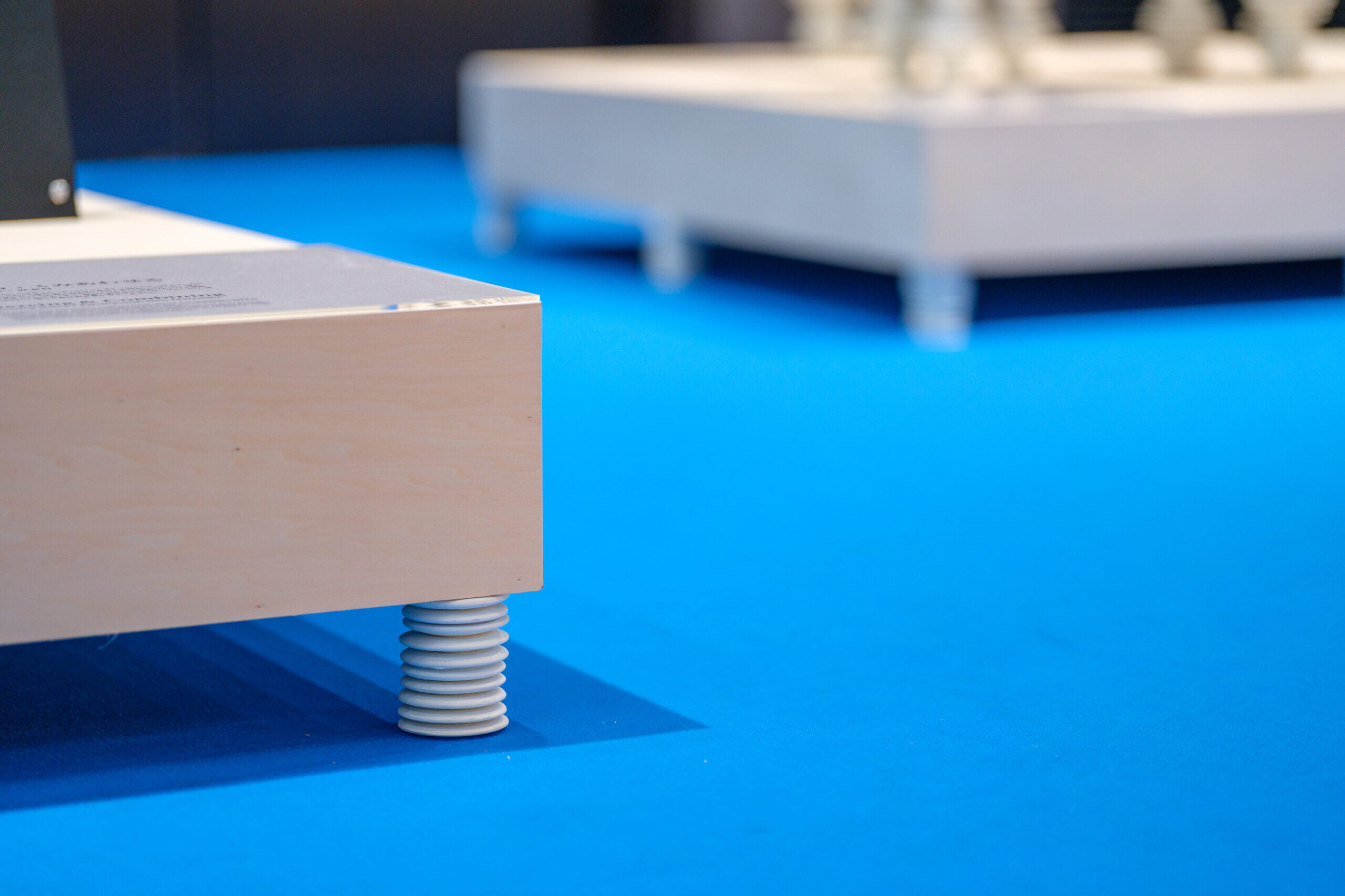
Exhibition: alter.Tokyo
Dates: November 7–9, 2025
Venue: Nihonbashi Mitsui Hall
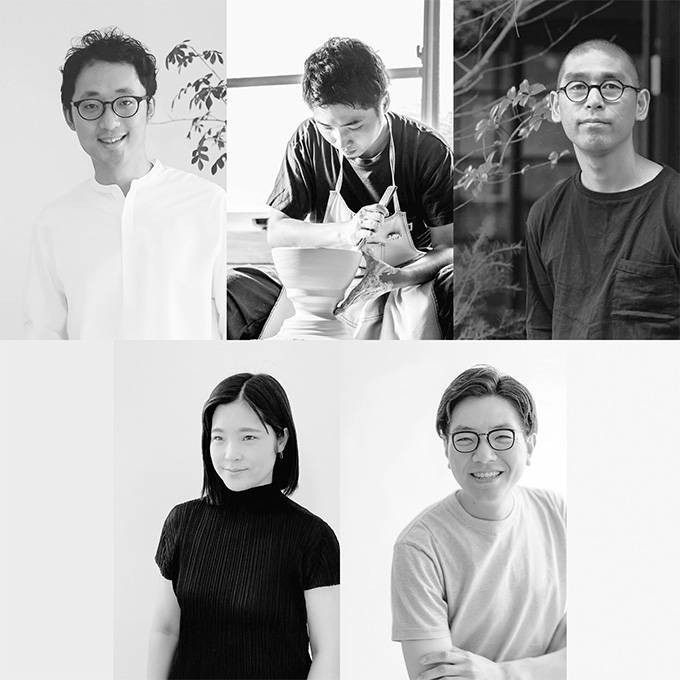
Members
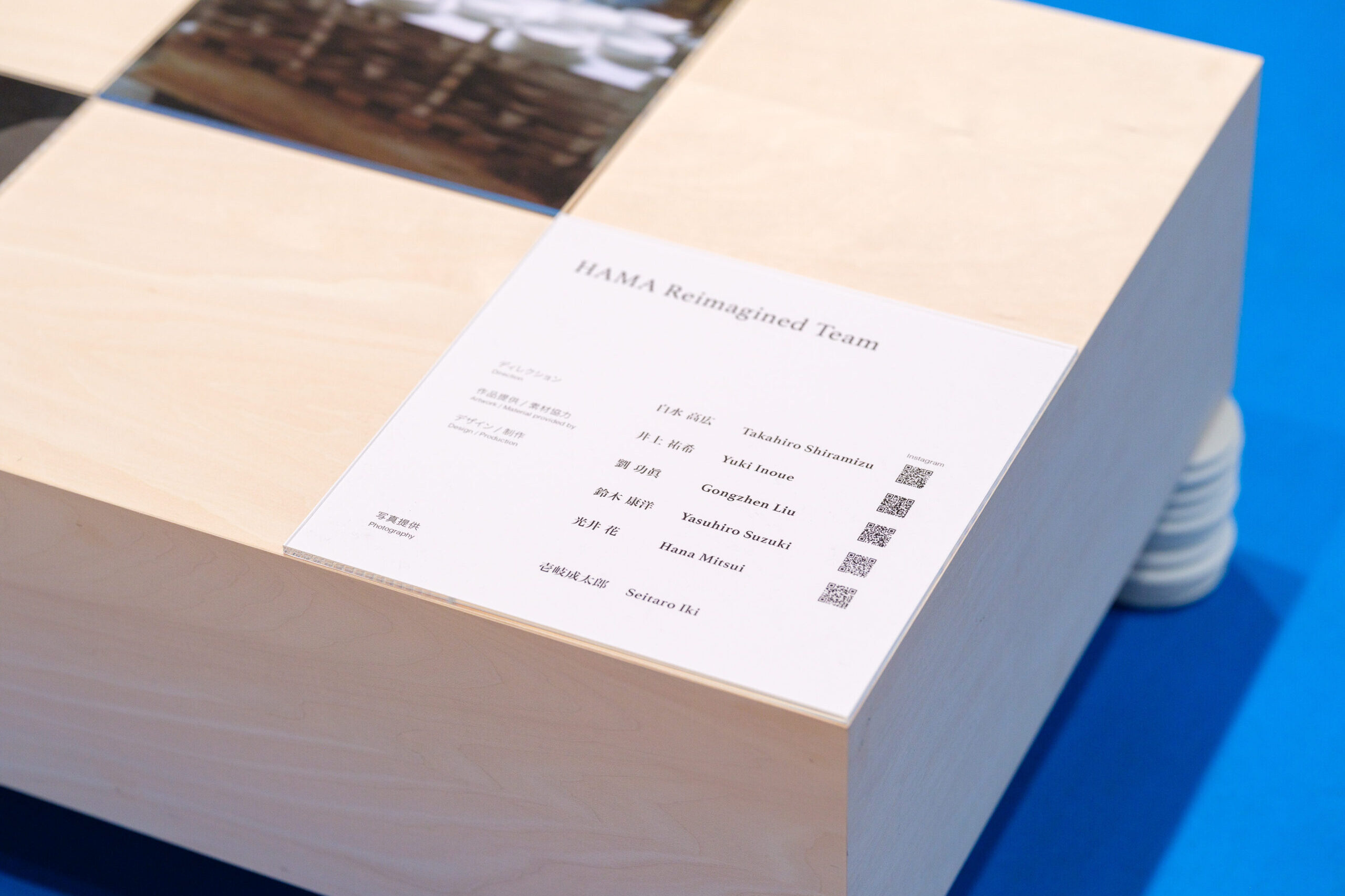
Direction: Takahiro Shiromizu
Production: Gongzhen Liu, Yasuhiro Suzuki, Hana Mitsui
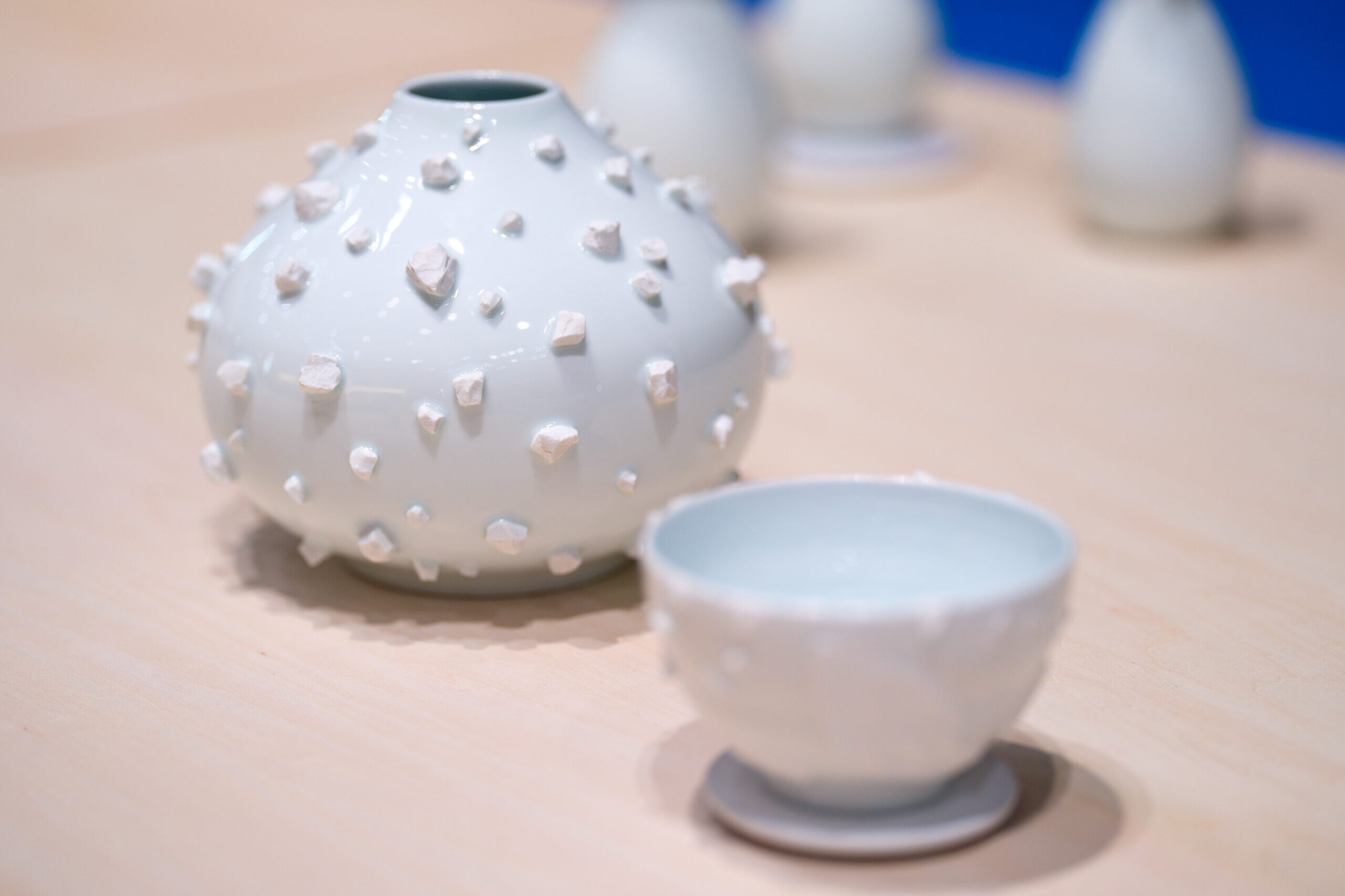
Artwork / Material Collaboration: Yuki Inoue
Hama Photography: Seitaro Iki

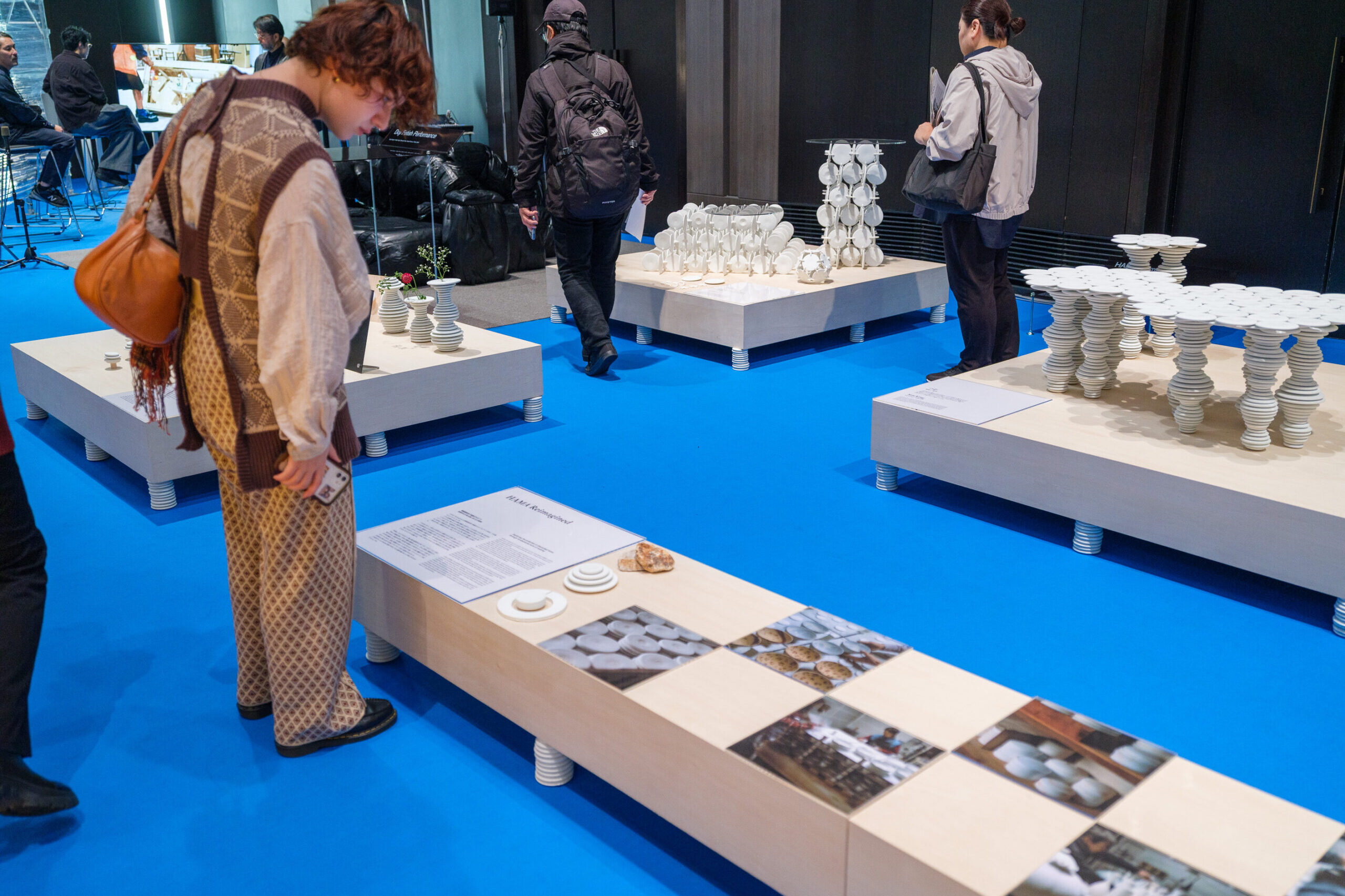
HAMA Reimagined brings together five creators from different disciplines.
Carpenter and woodwork designer Gongzhen Liu supports on-site craftsmanship through the construction of residential and commercial interiors as well as furniture production. Takahiro Shiromizu, founder of Unagi no Nedoko, works closely with craft regions across Kyushu to promote local culture and industry. Ceramic artist Yuki Inoue, who inherits the tradition of Arita porcelain, explores new forms of expression through collaborations with fashion and art. Textile designer Hana Mitsui reinterprets traditional Japanese techniques for contemporary contexts, presenting her work both in Japan and internationally. Product designer Yasuhiro Suzuki pursues design that draws out the inherent qualities of materials.
Through the intersection of these diverse perspectives, the project expands the potential of HAMA.
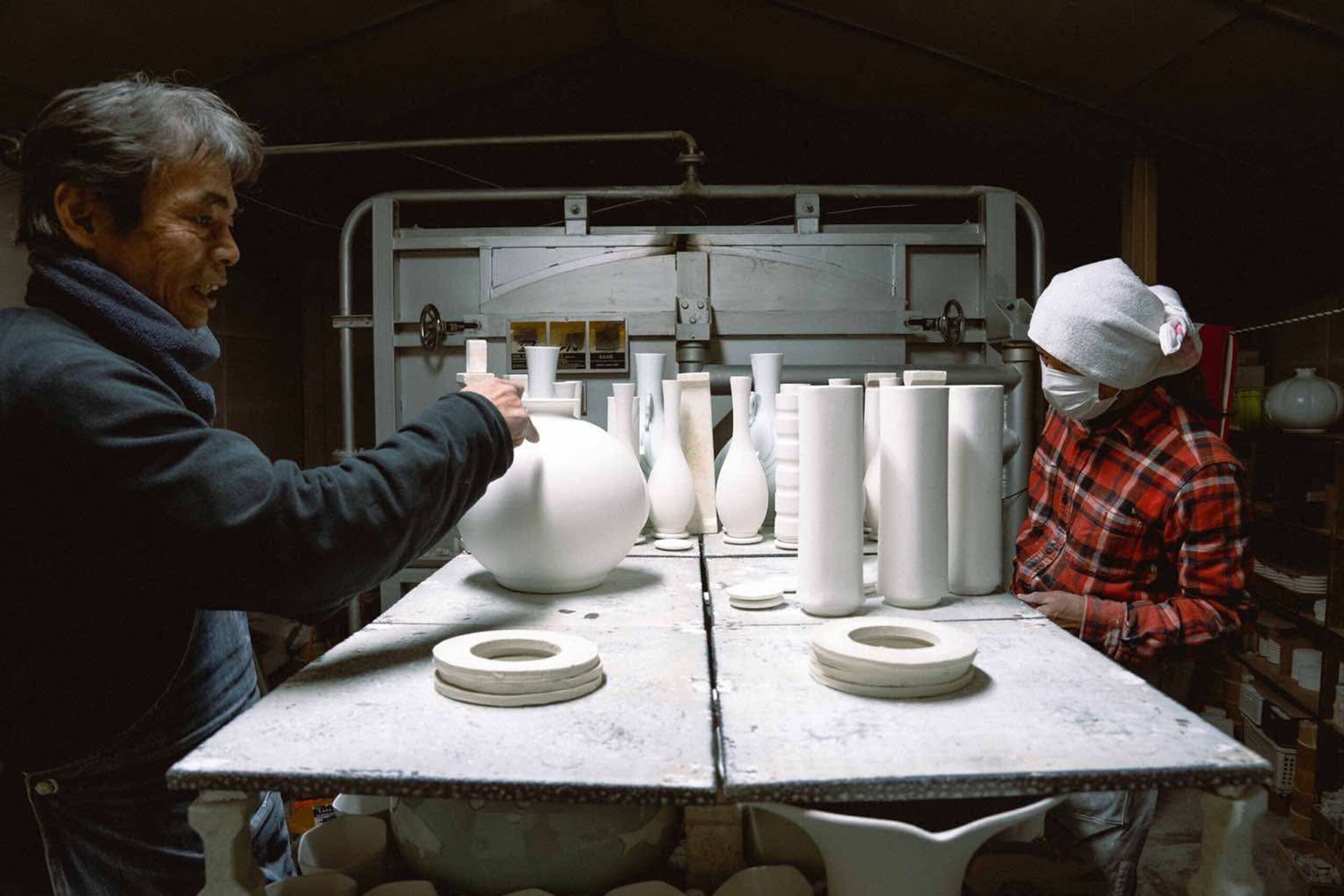
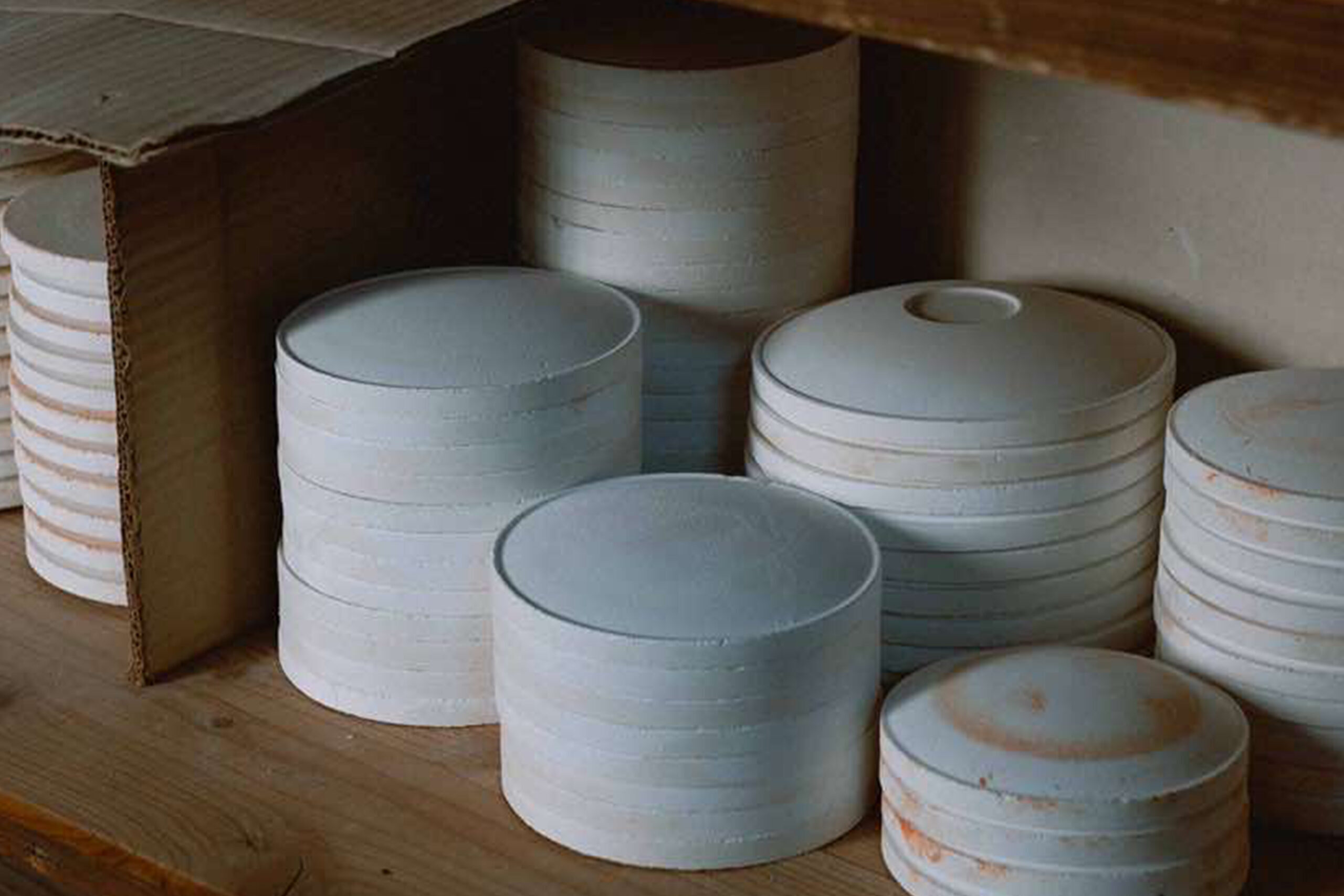
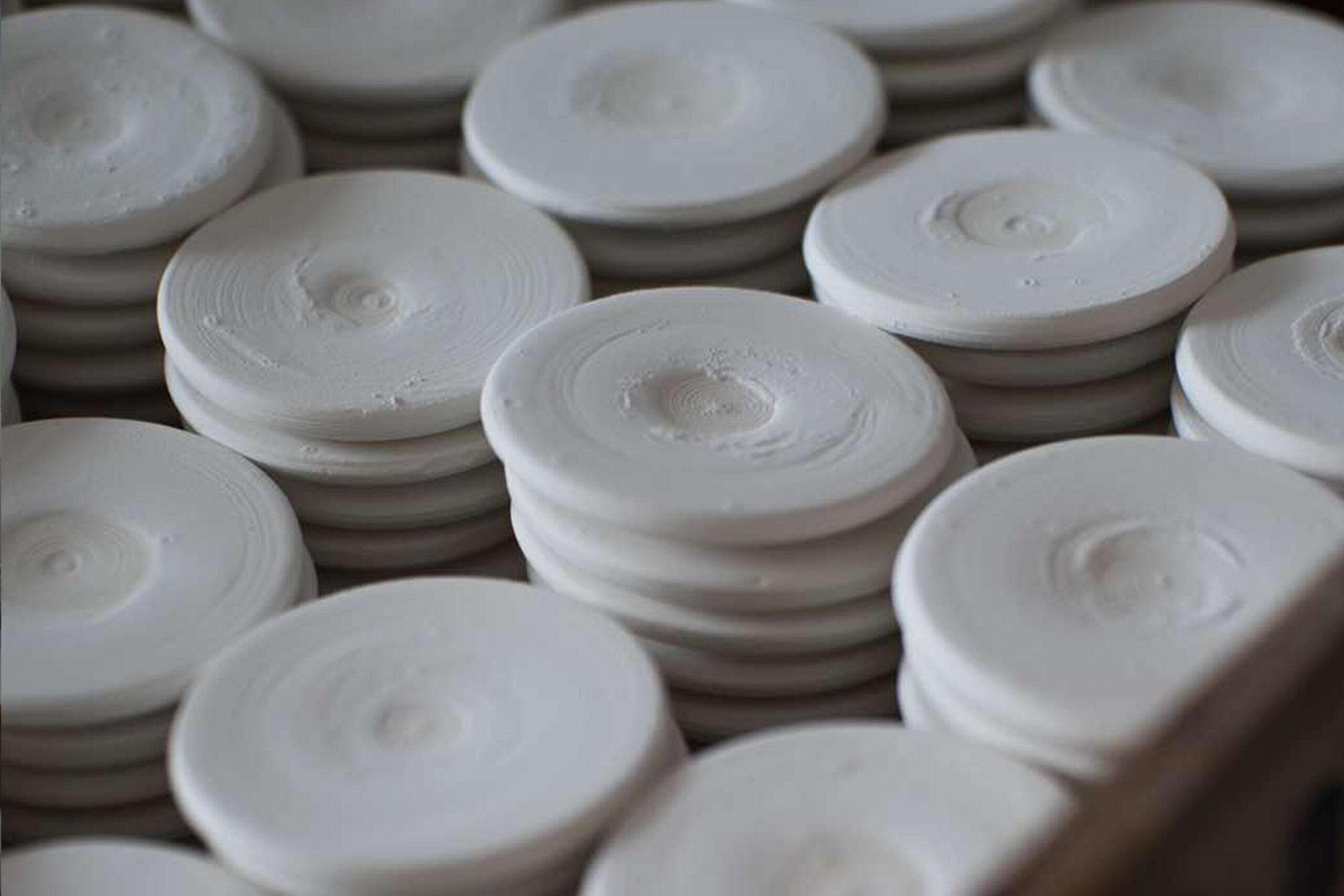
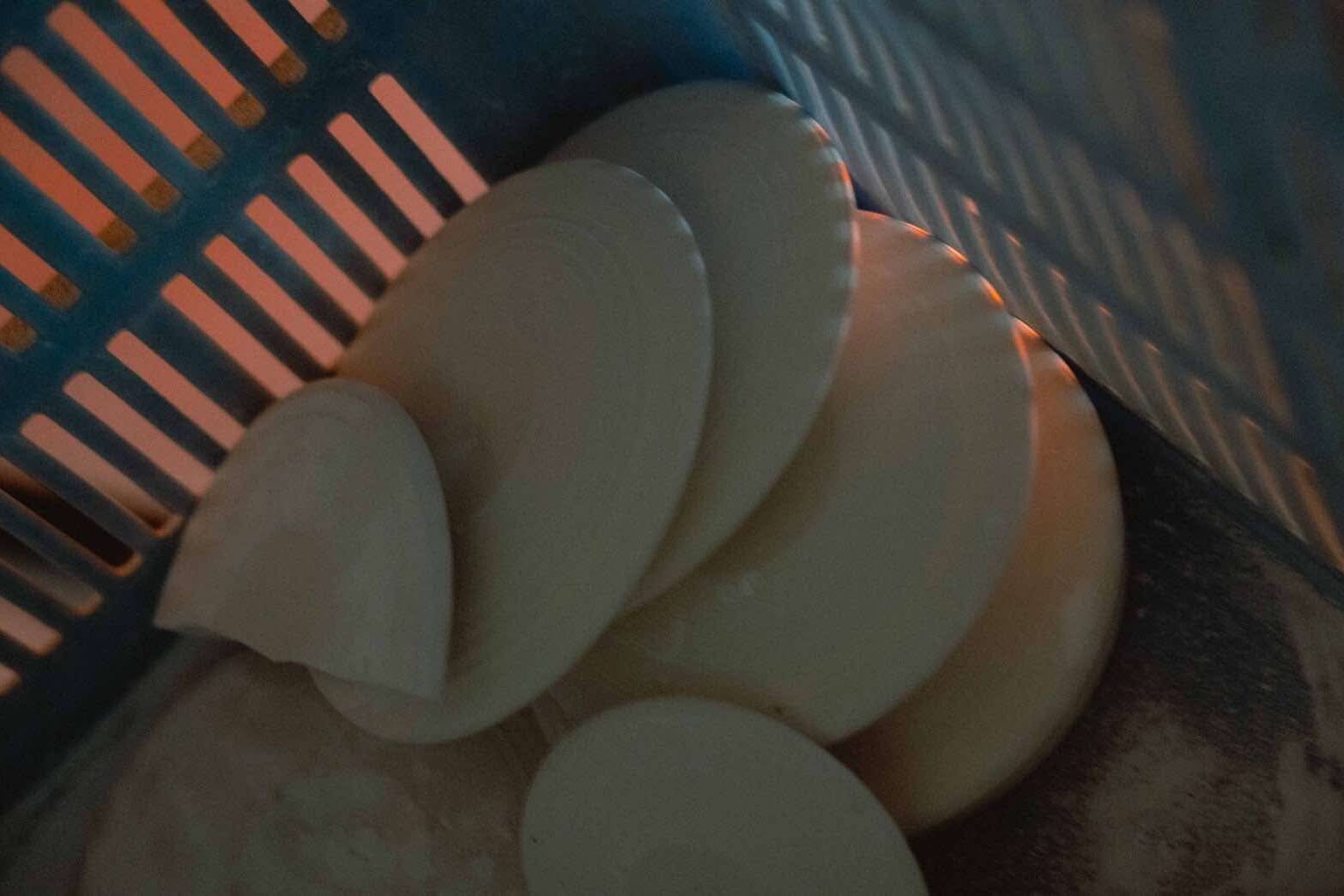
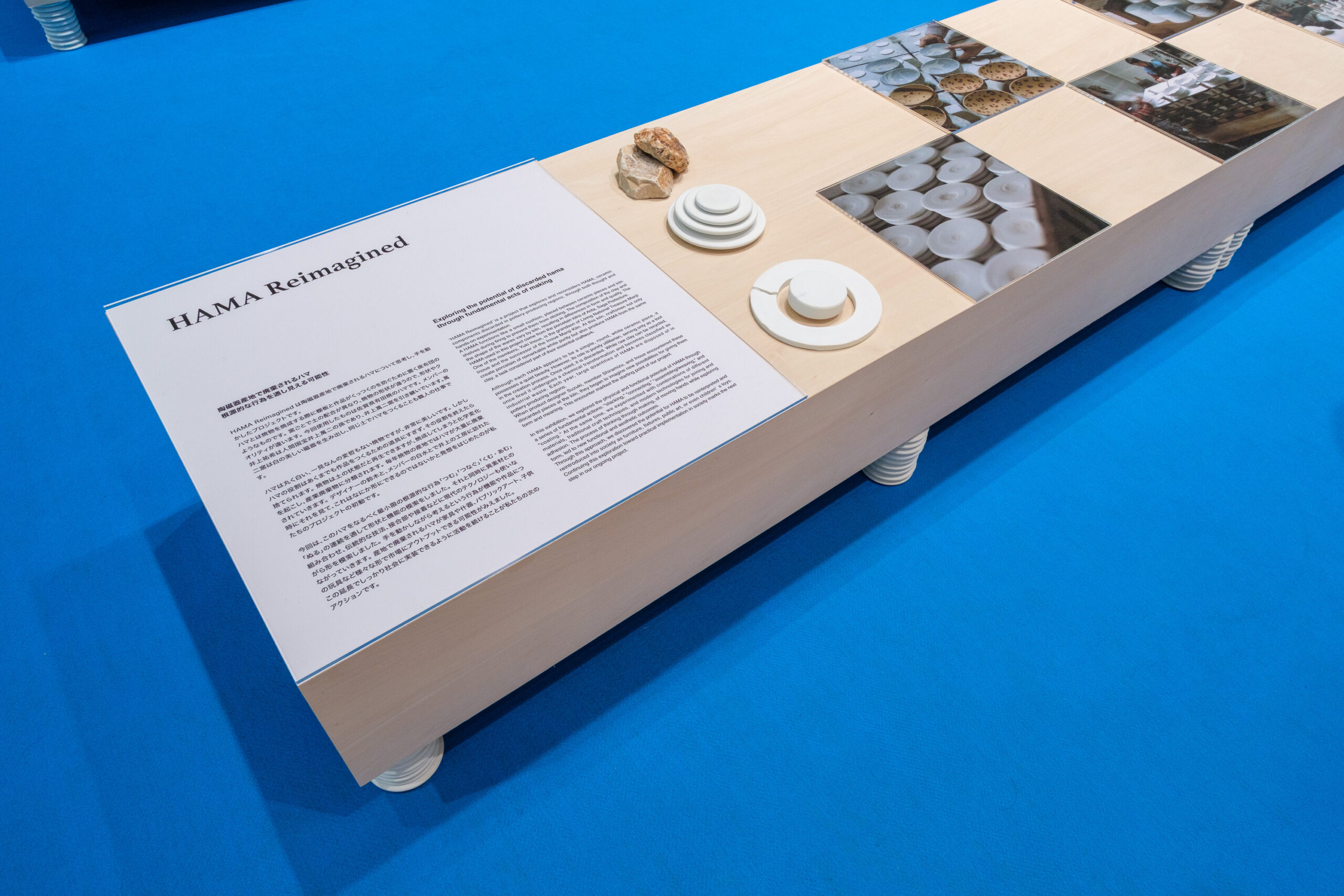
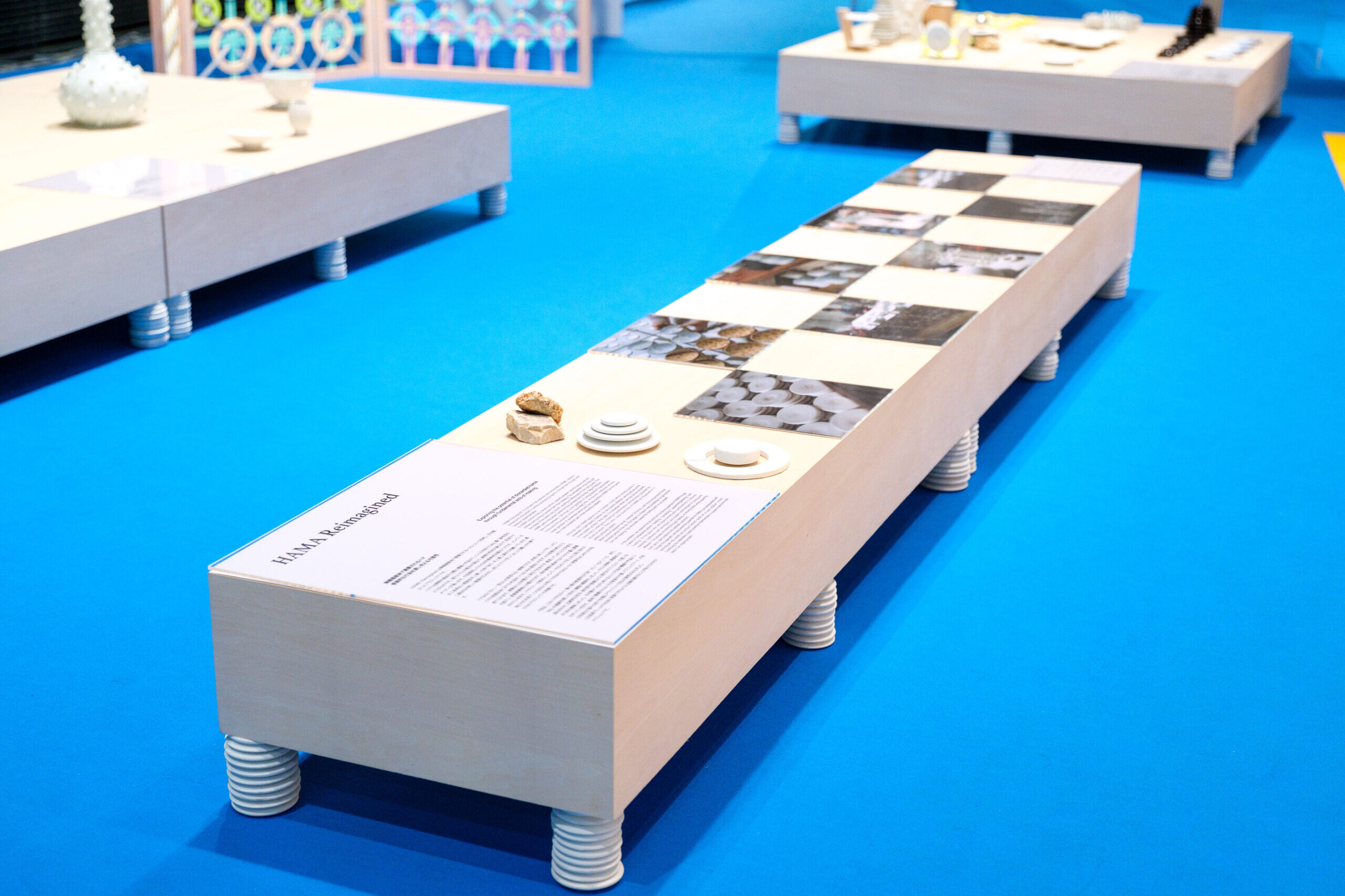
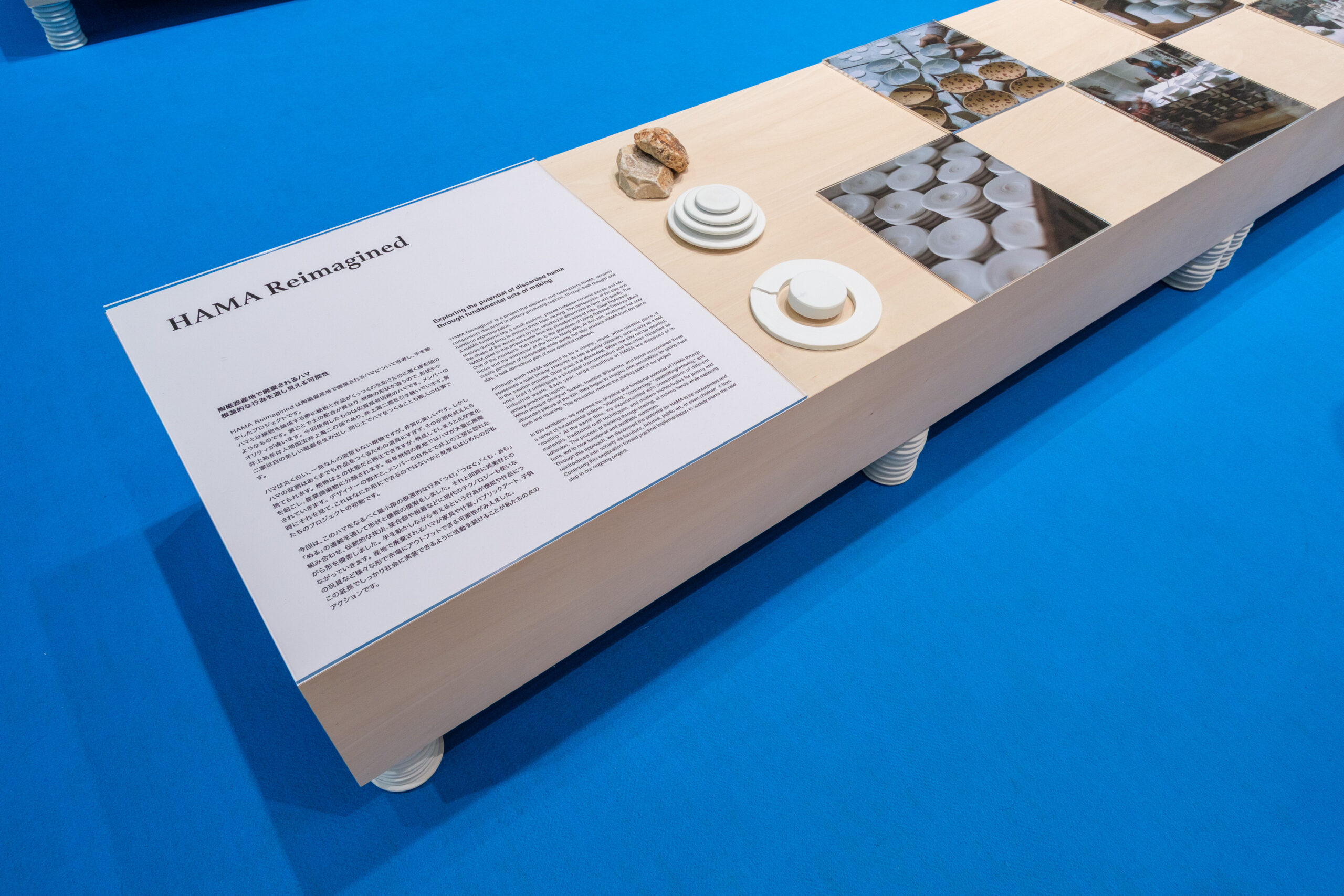
HAMA Reimagined is a project that reflects on and works directly with Hama,
objects that are discarded in ceramic production areas.
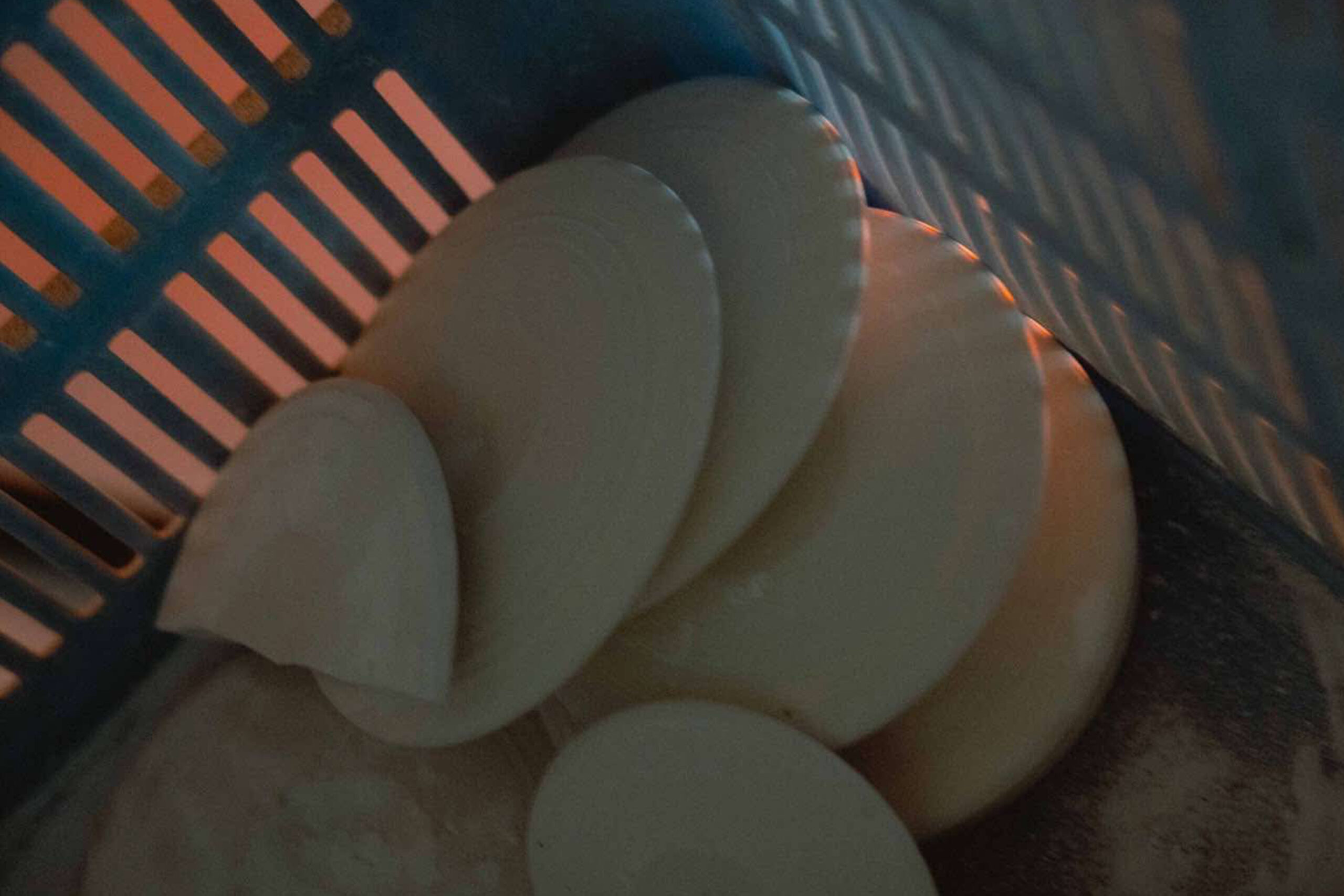
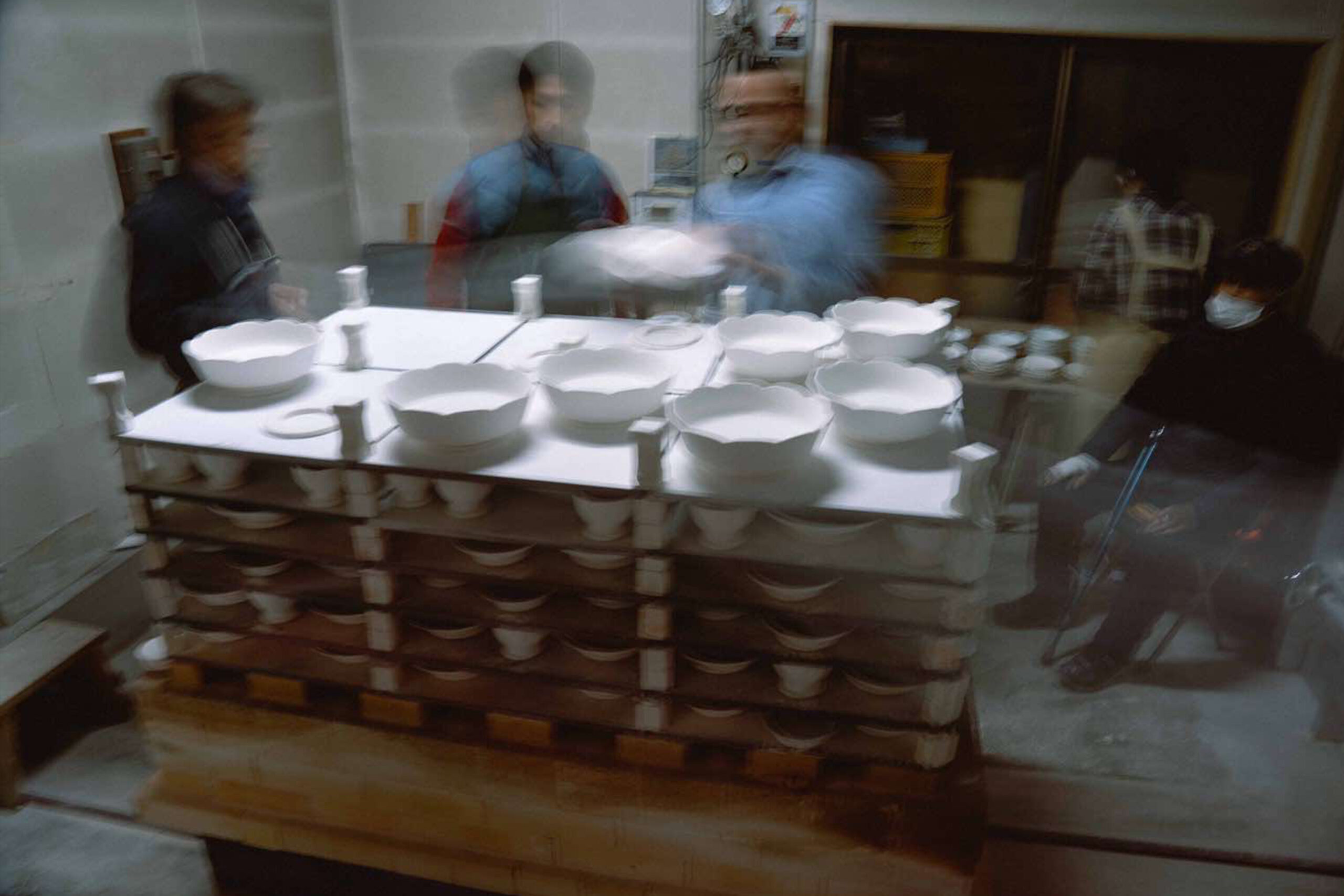
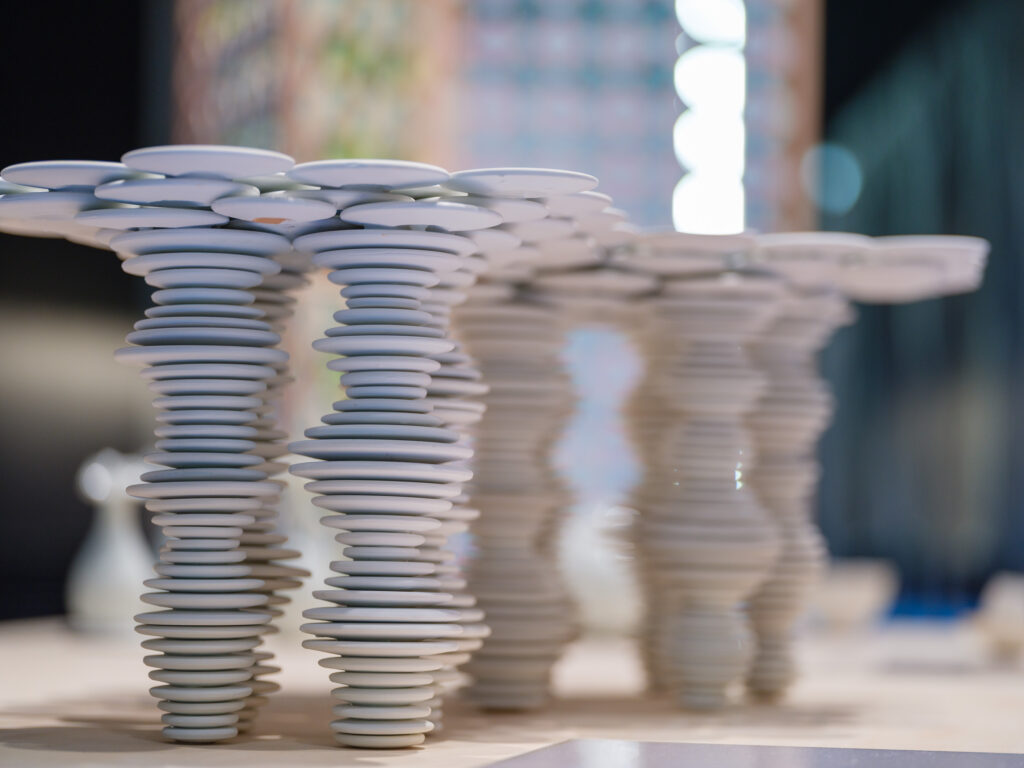
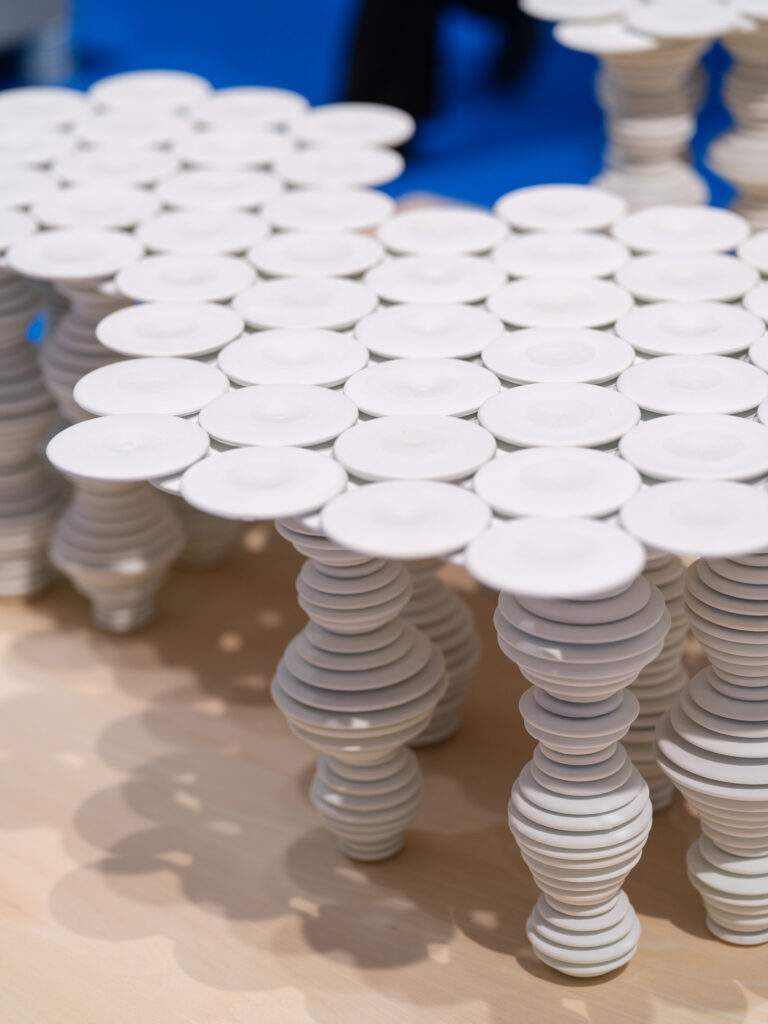
A hama is a cushion-like support placed between kiln shelves and ceramic works to prevent them from sticking together during firing. Because each kiln uses different clay compositions and produces ceramics of varying shapes, hama differ in form and quality.The hama used in this project originate from Arita ware in Saga Prefecture. One of the project members, Yuki Inoue, is the grandson of Living National Treasure Manji Inoue and carries on the Inoue Manji kiln. The Manji kiln is known for producing exceptionally refined white porcelain, and crafting hama from the same clay is also part of the ceramic artisan’s work.
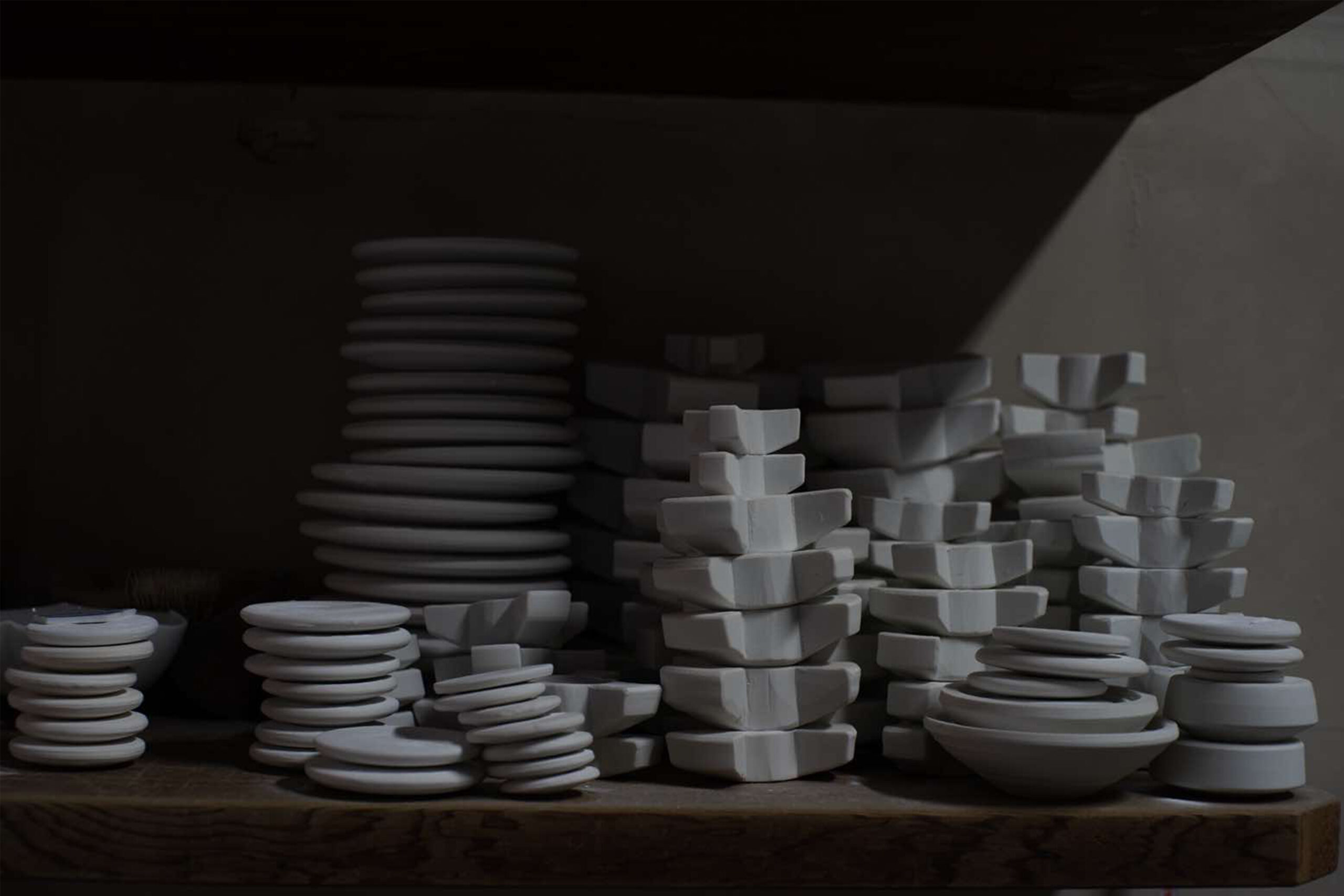
Hama are round, white ceramic objects—seemingly ordinary at first glance, yet remarkably beautiful. However, their role is purely utilitarian: once they have fulfilled their function in supporting ceramic works, they are discarded. While unfired clay can be recycled, once fired, it undergoes a chemical transformation and is classified as industrial waste. Every year, large quantities of hama are discarded in ceramic production regions.
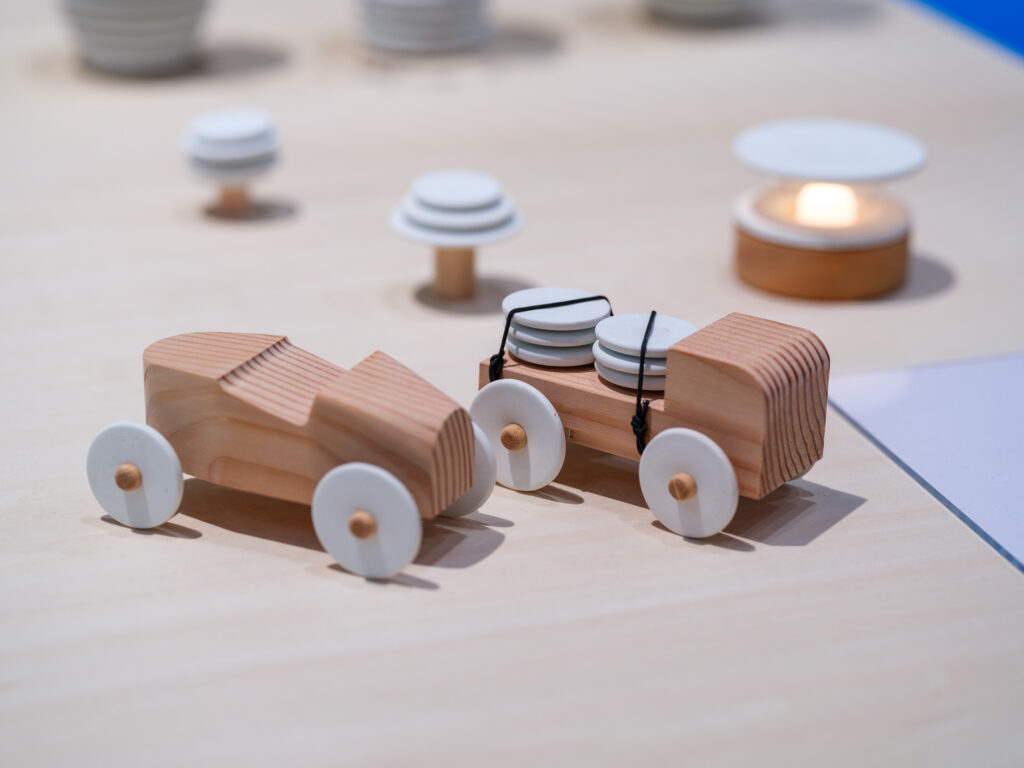
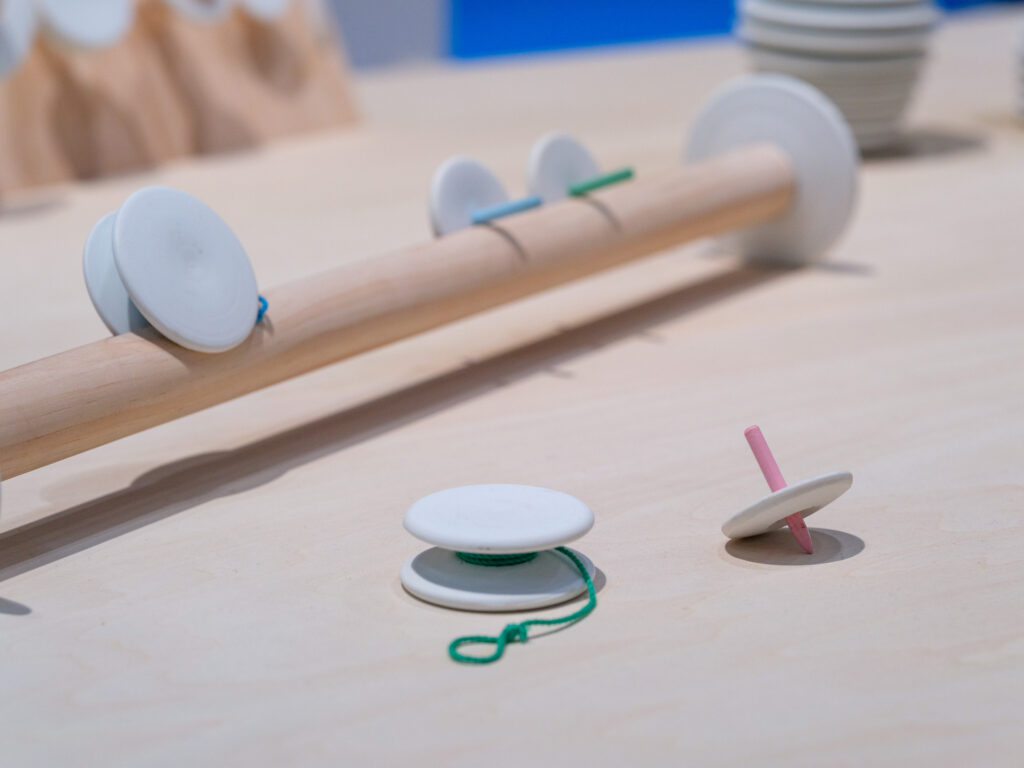
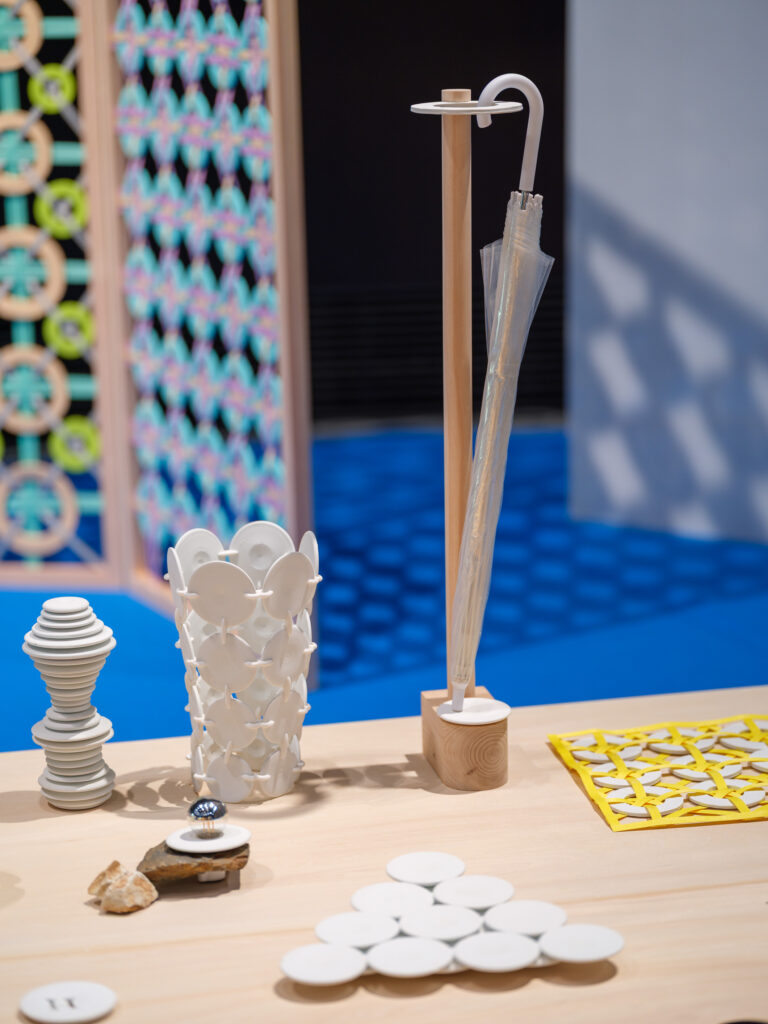
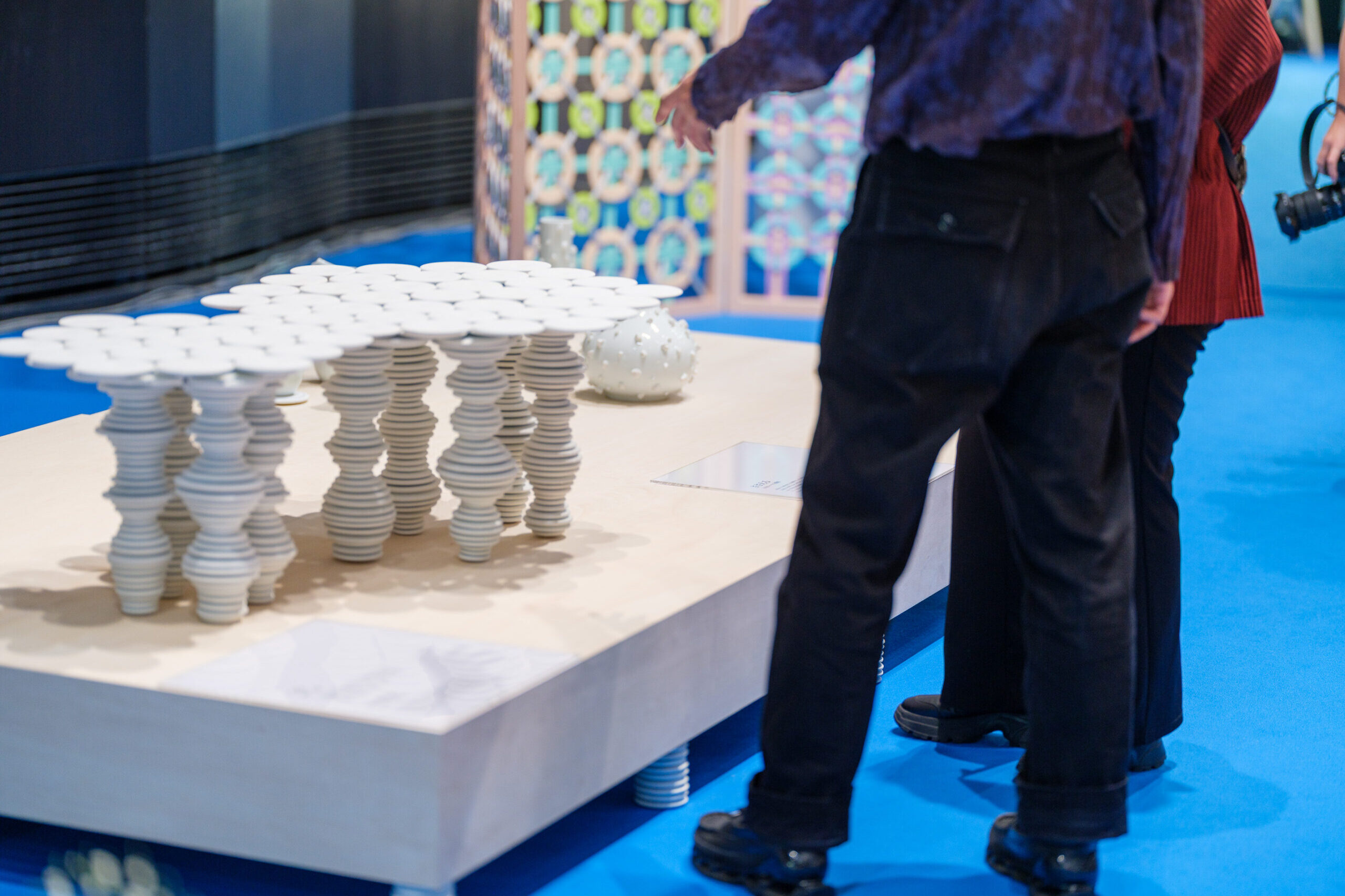
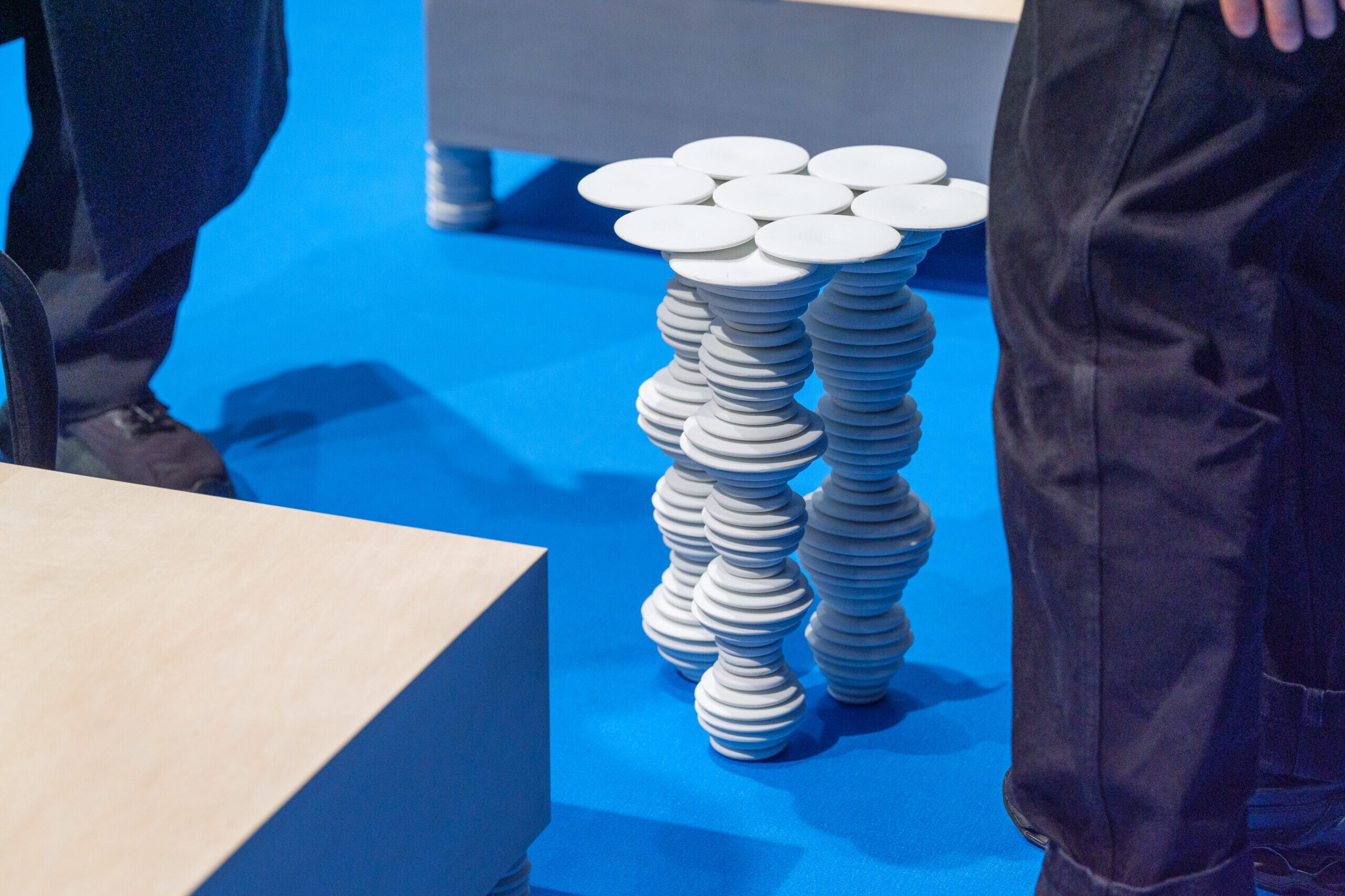
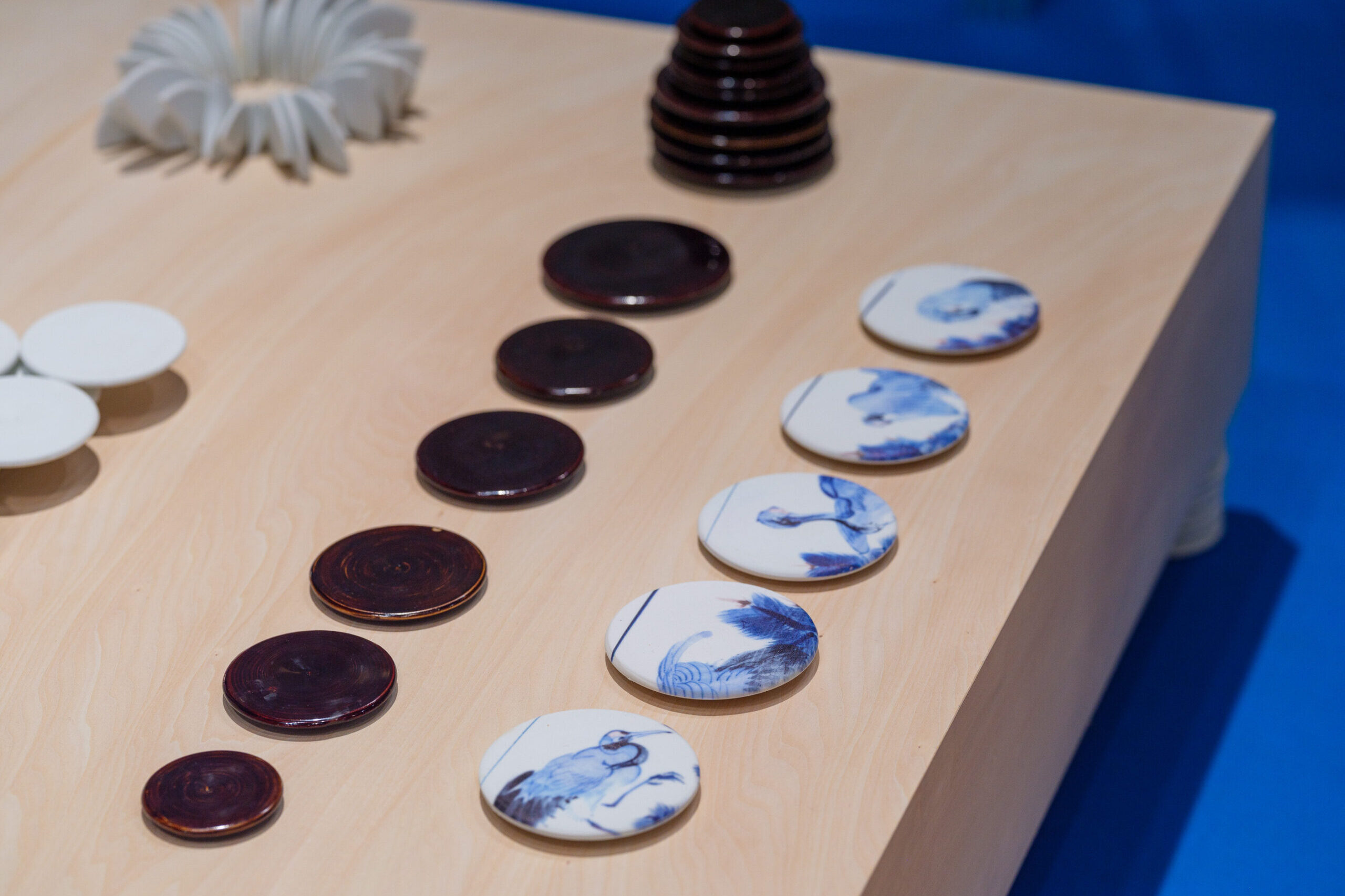
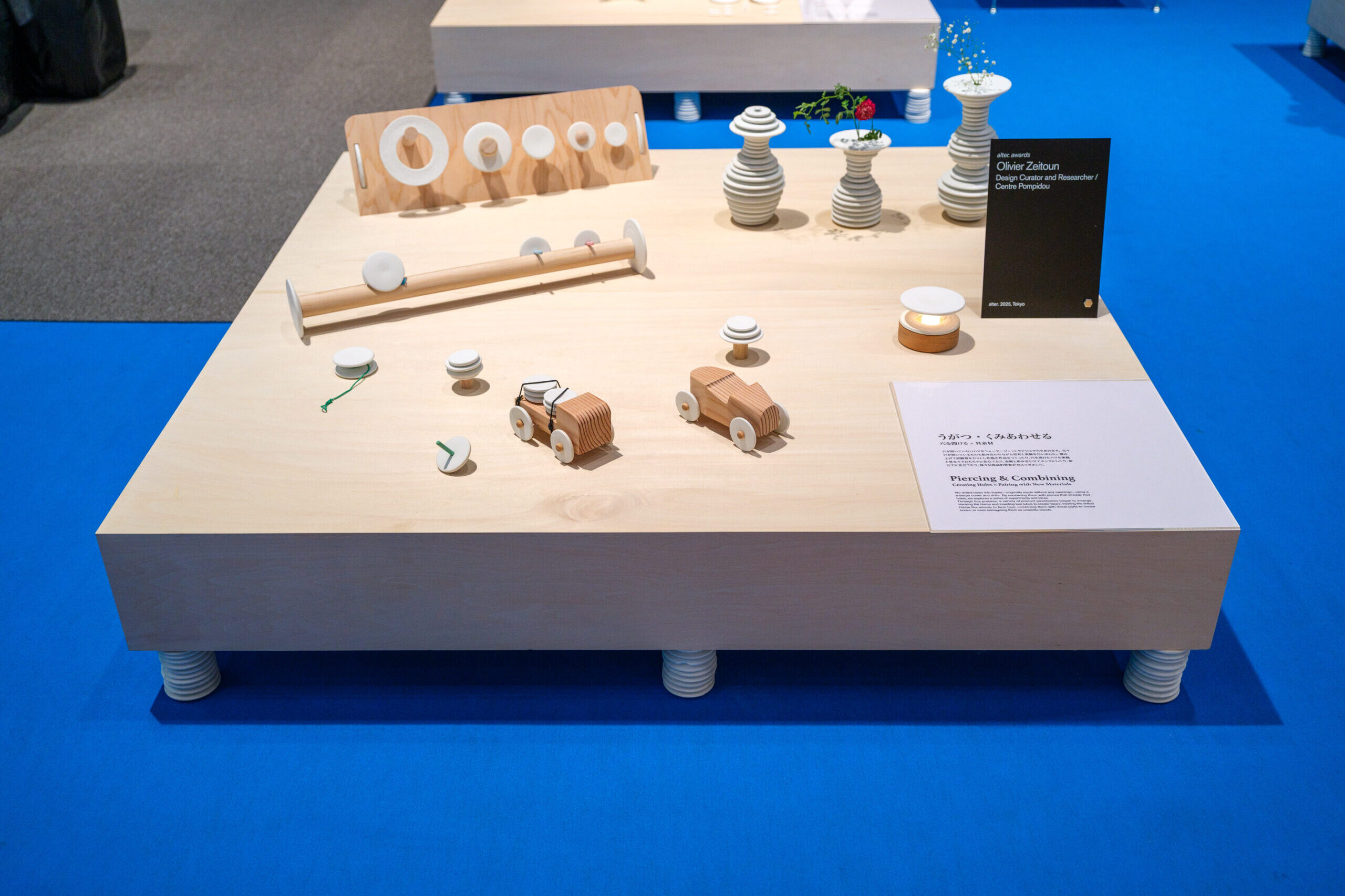
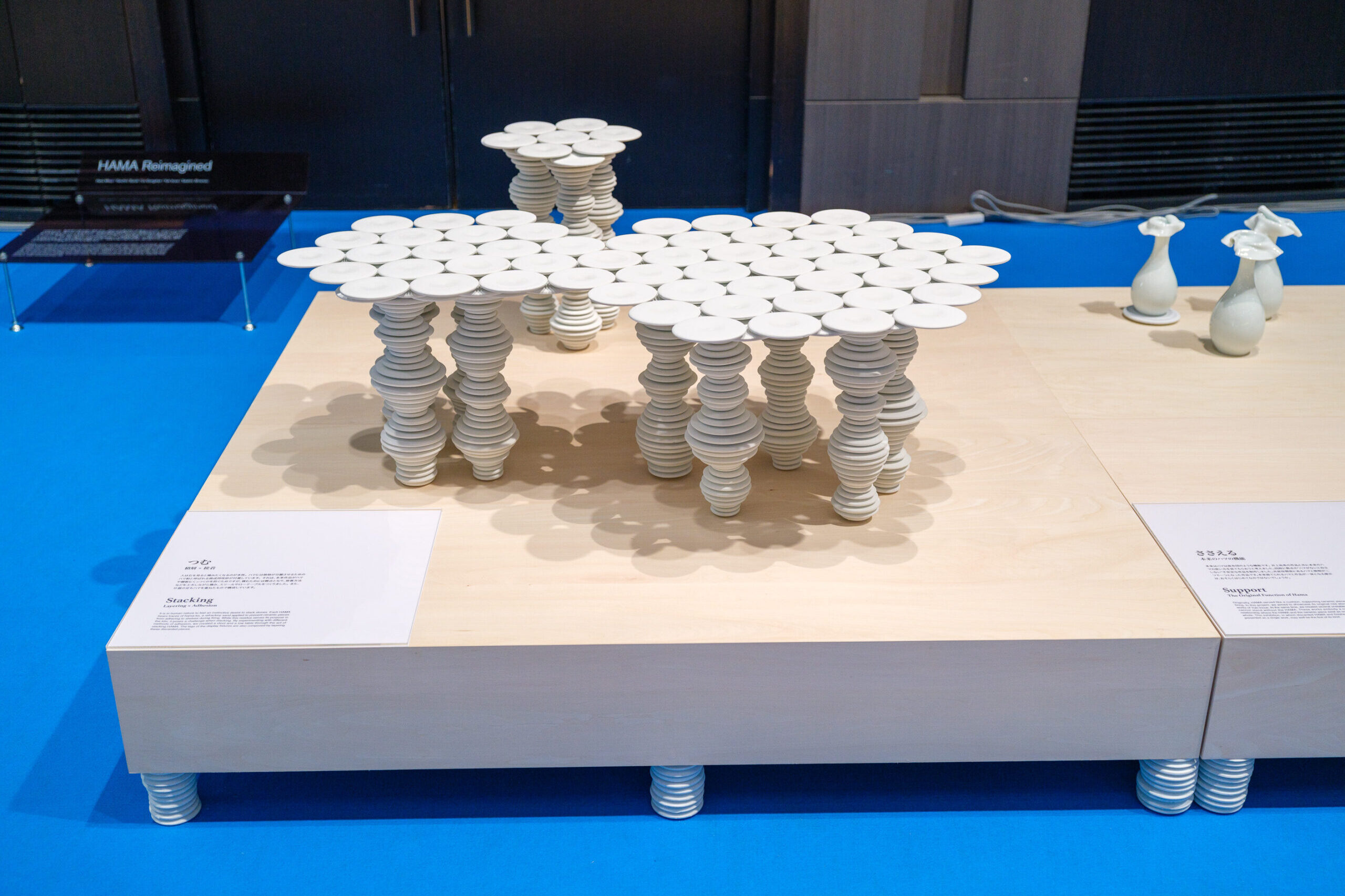
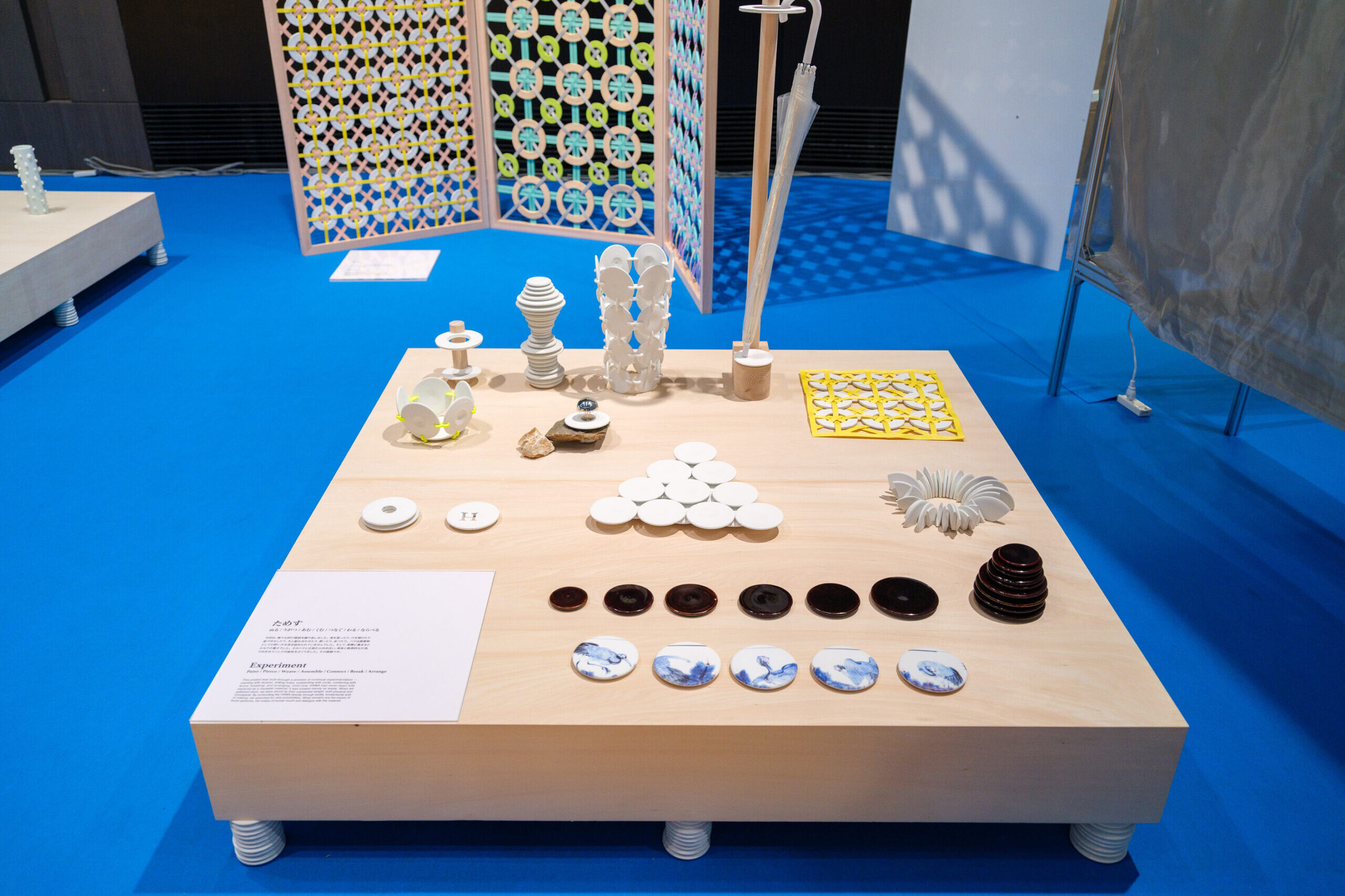
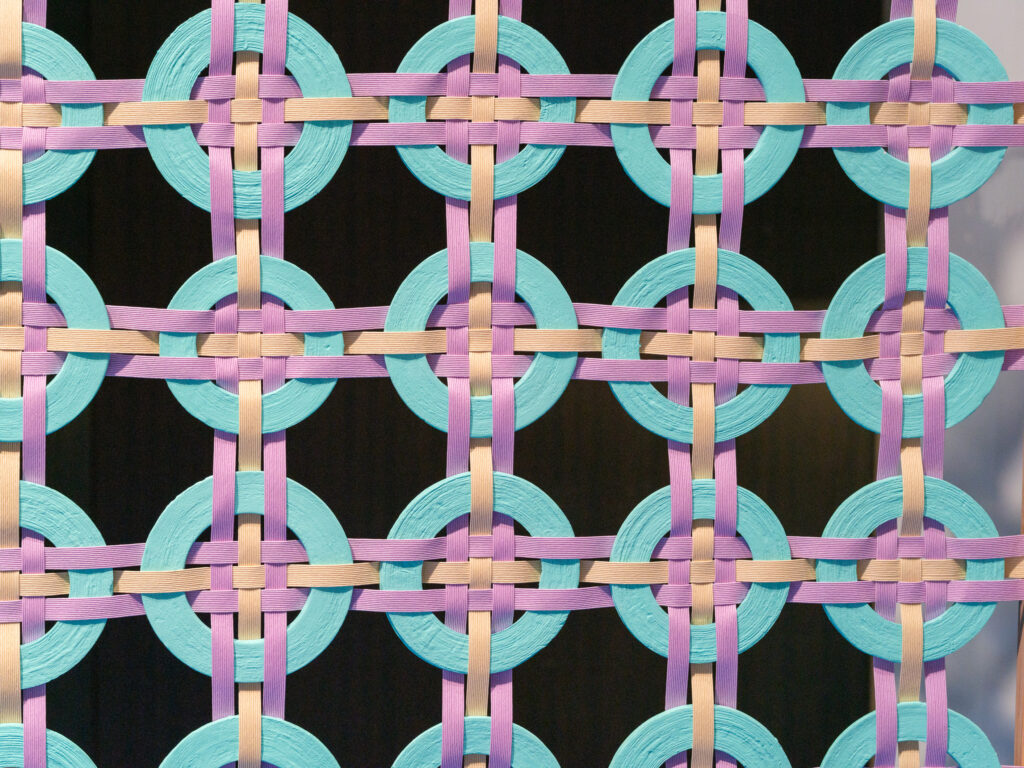
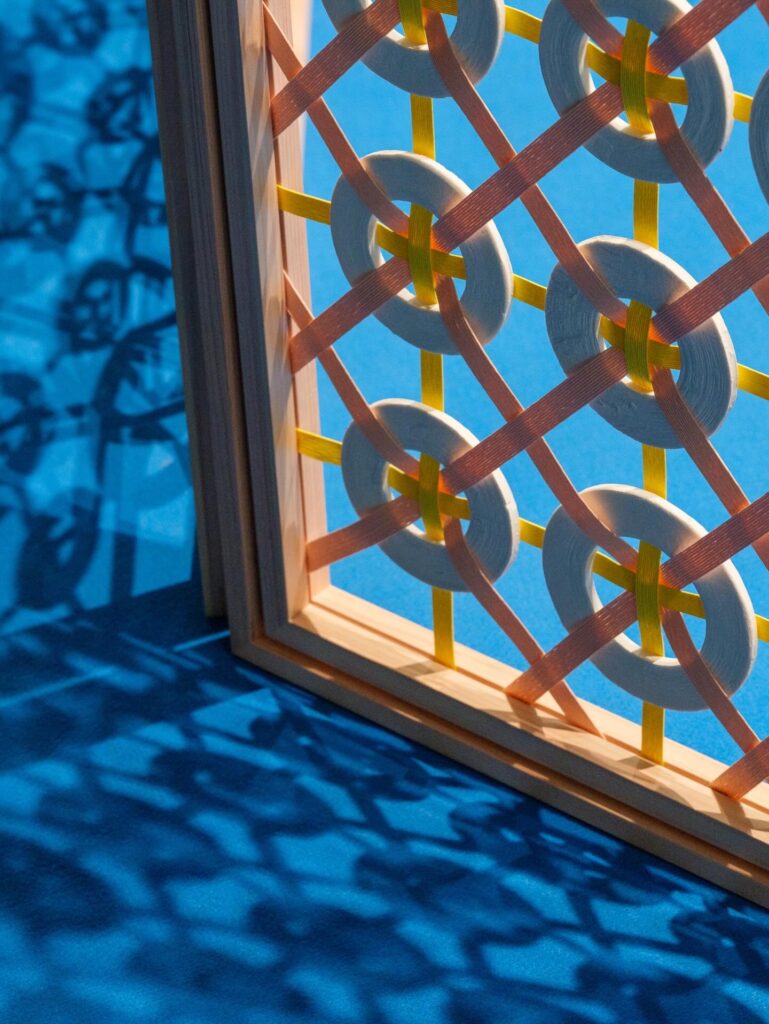
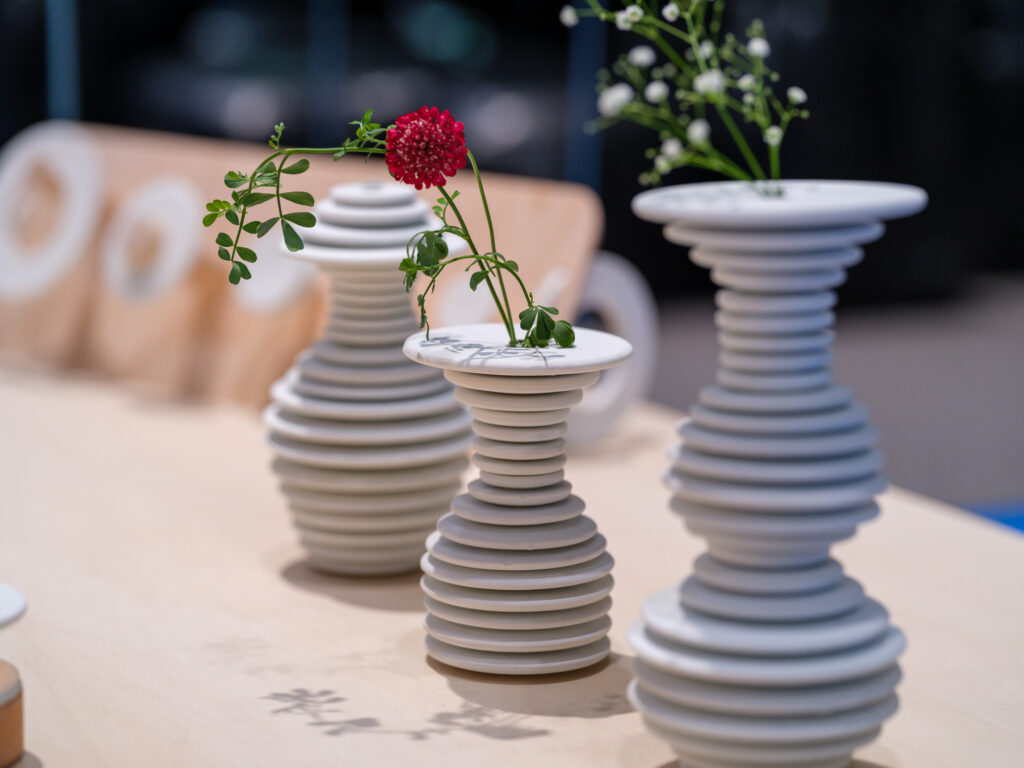
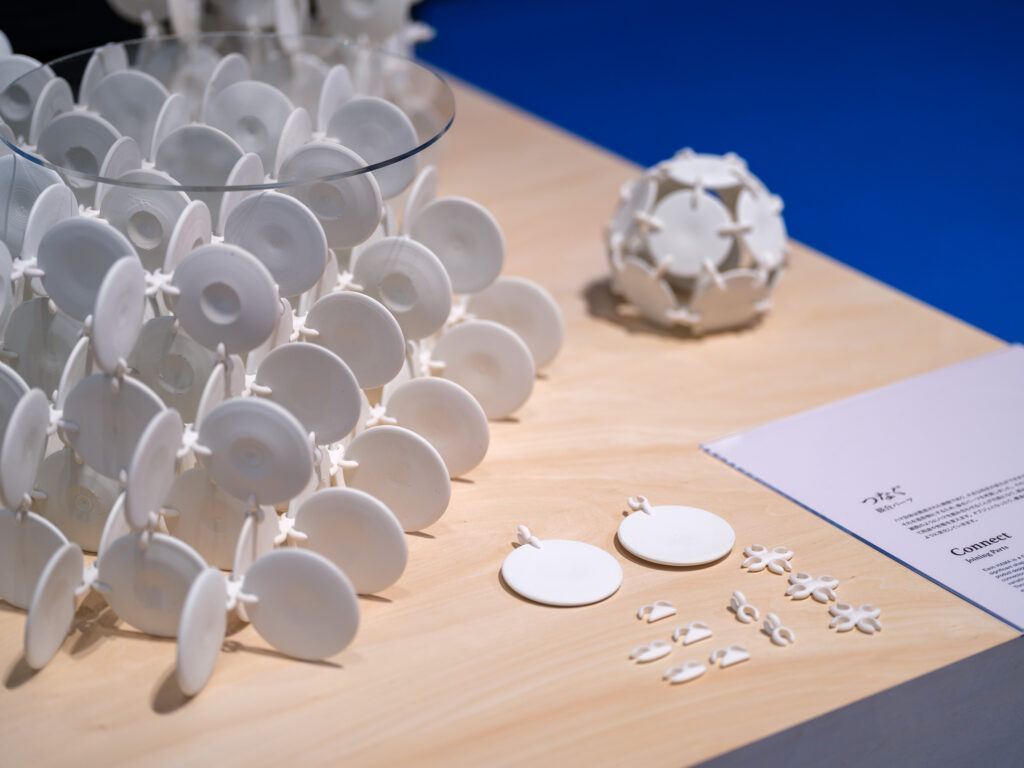
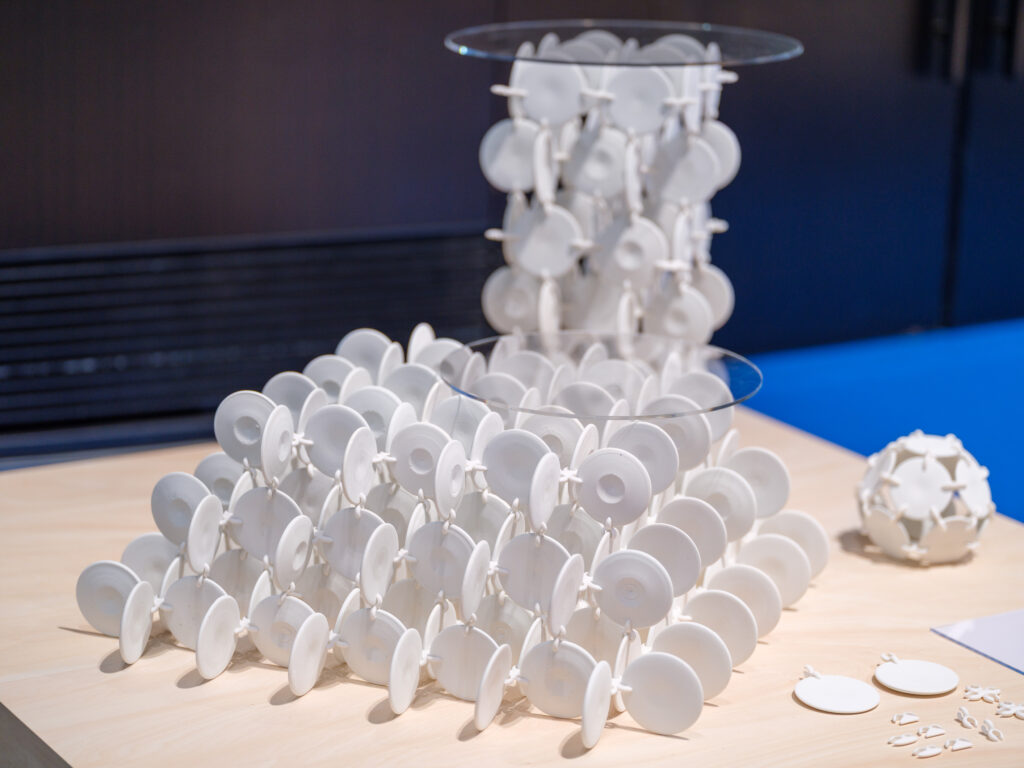
The project began when product designer Suzuki, together with member Shiromizu, visited Inoue’s workshop and encountered piles of discarded hama. This moment sparked the question: Could these objects be transformed into something new?In this project, we explored form and function through a sequence of minimal, fundamental actions: stacking, connecting, assembling/weaving, and coating. At the same time, we experimented with combinations of different materials, traditional techniques, and contemporary technologies such as modern joints and adhesives.
By thinking through making—working with our hands—new functions and forms gradually emerged. Through this process, we began to see the potential for discarded hama to be reintroduced into the market as furniture, fixtures, public art, children’s toys, and more.
Our next step is to continue developing this project toward meaningful social implementation, ensuring that these possibilities can take root beyond the exhibition context.
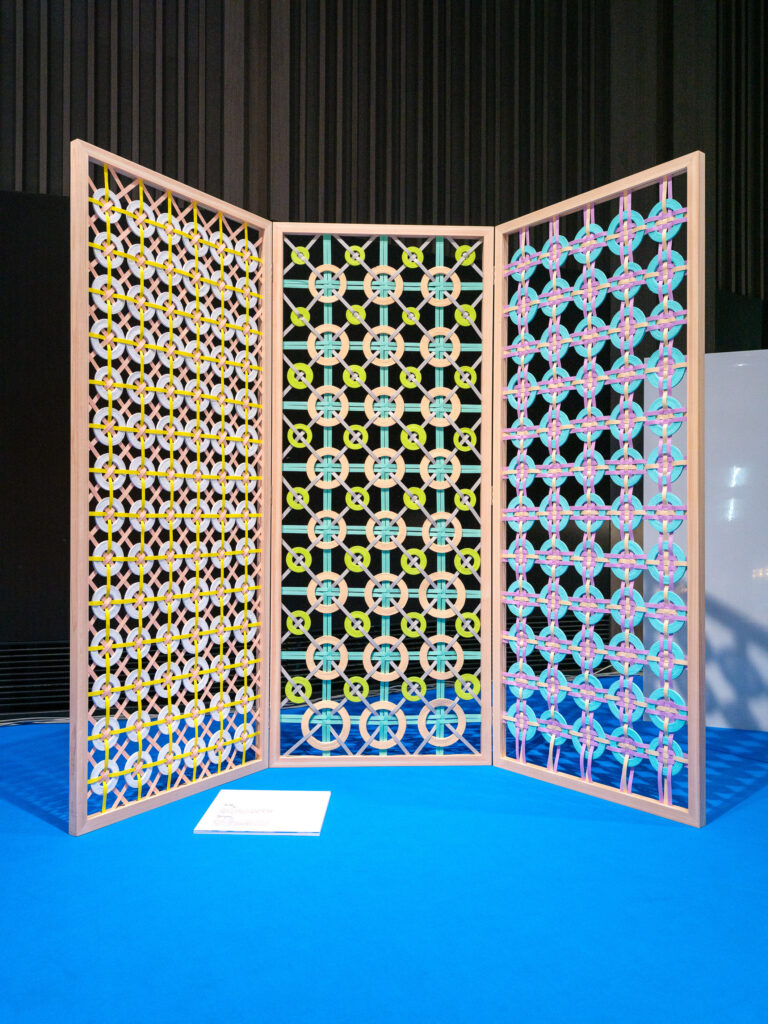
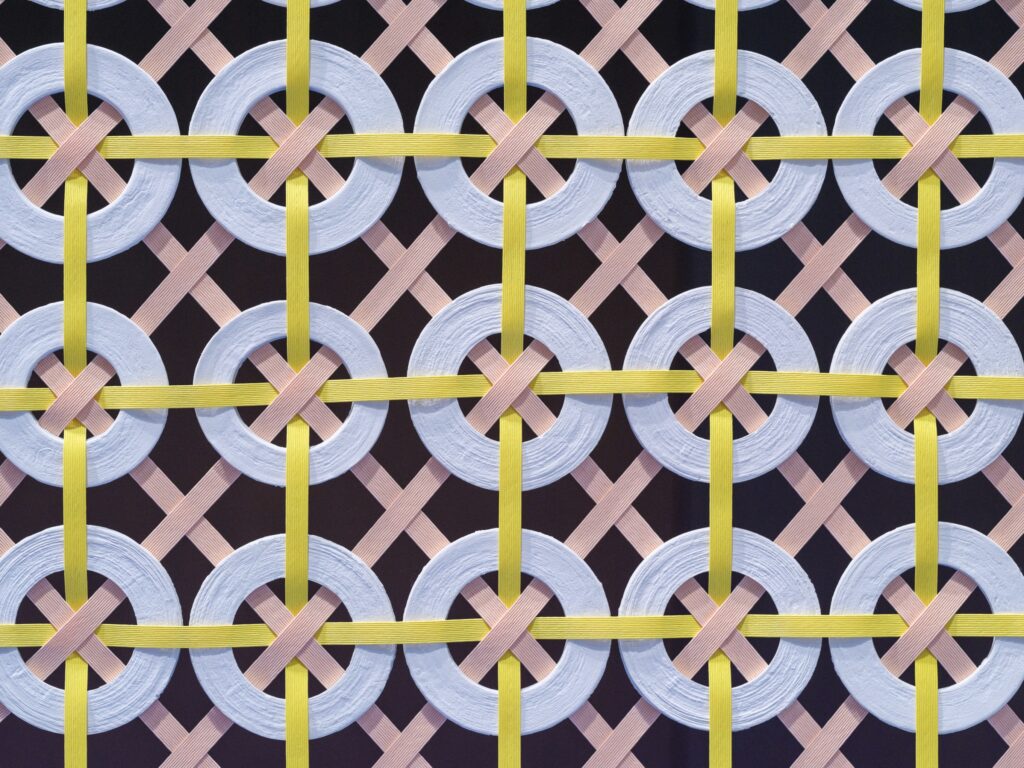
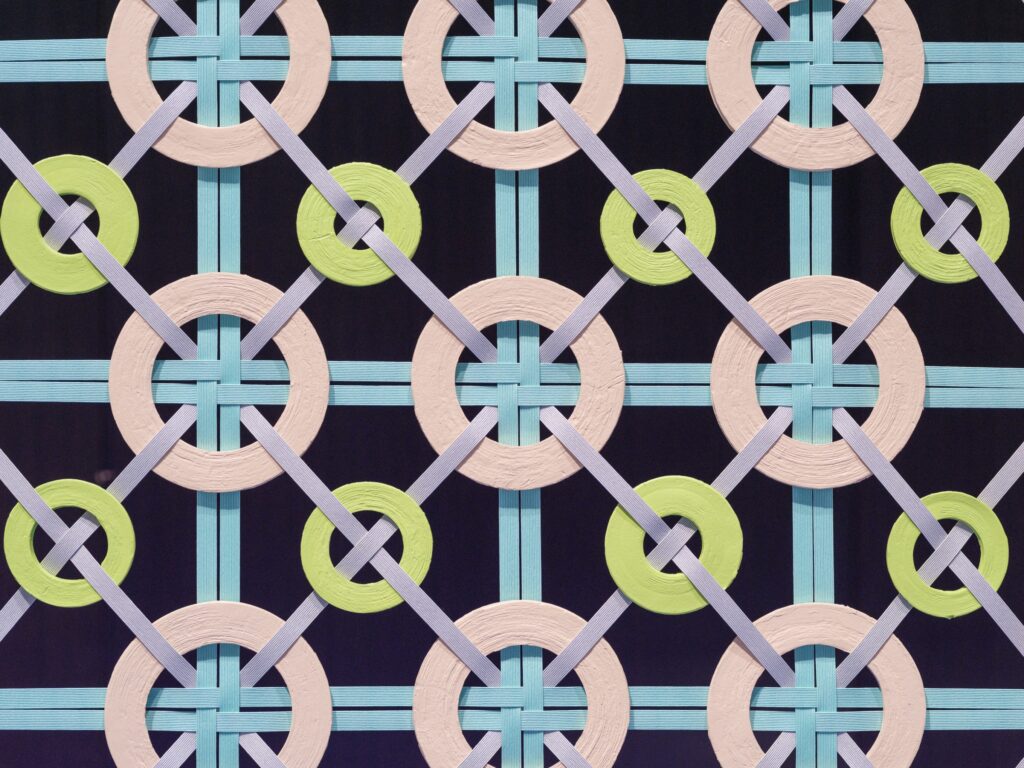
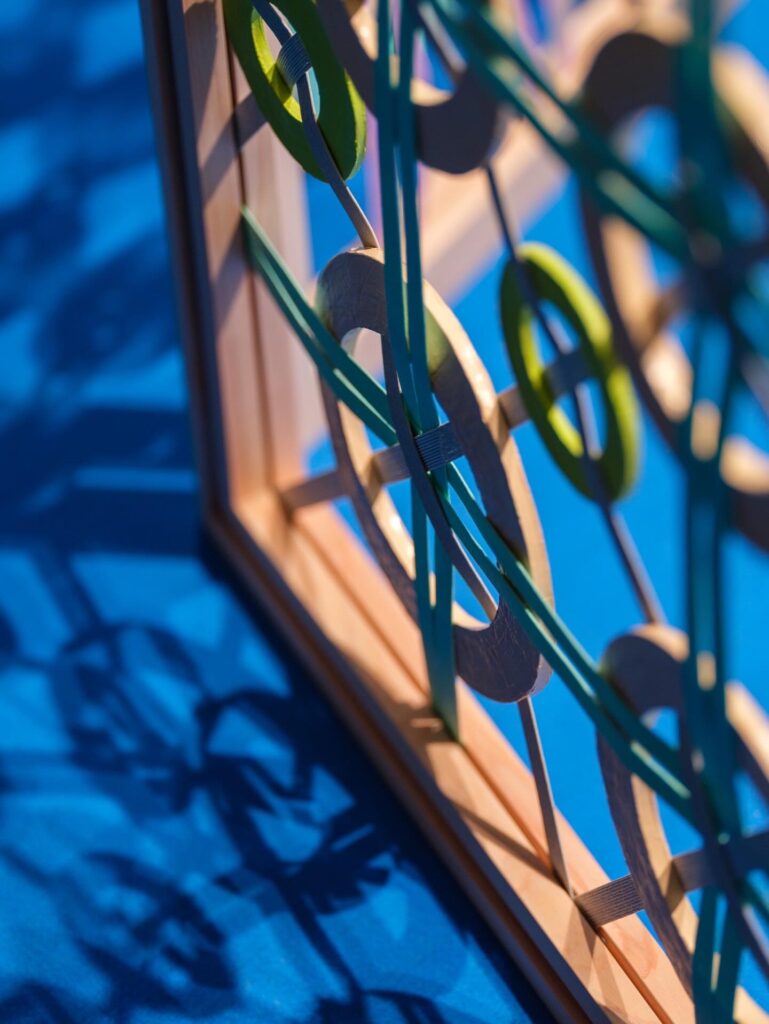
「Weaving」
Created by Hana Mitsui
「Stacking」
Created by Yasuhiro Suzuki
「Connecting」
Awarded by Tanja Hwang, Curator at The Museum of Modern Art (MoMA)
Created by Yasuhiro Suzuki
Awarded by Olivier Zeitoun, Curator at the Centre Pompidou
Created by Gongzhen Liu
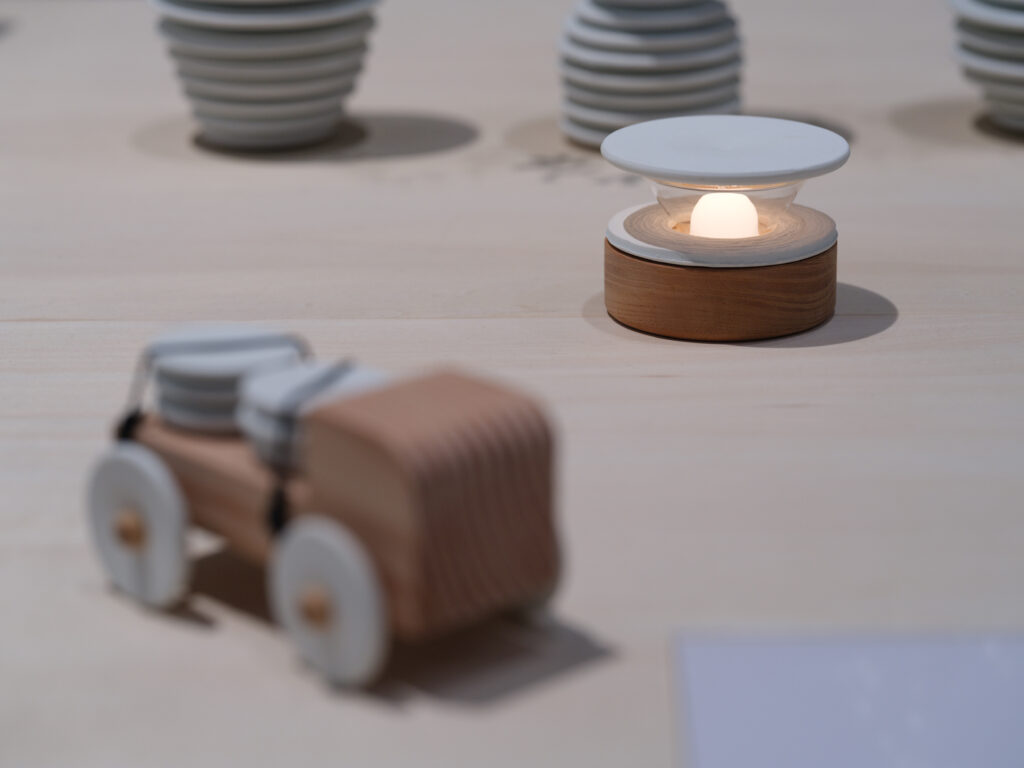
「piercing」
Created by Gongzhen Liu